

Pocillopora damicornis larvae pCO2 x temperature experiment
Take-home message: “Coral larvae may survive future oceans, but rising temperatures quietly drain the energy reserves they need to thrive.”
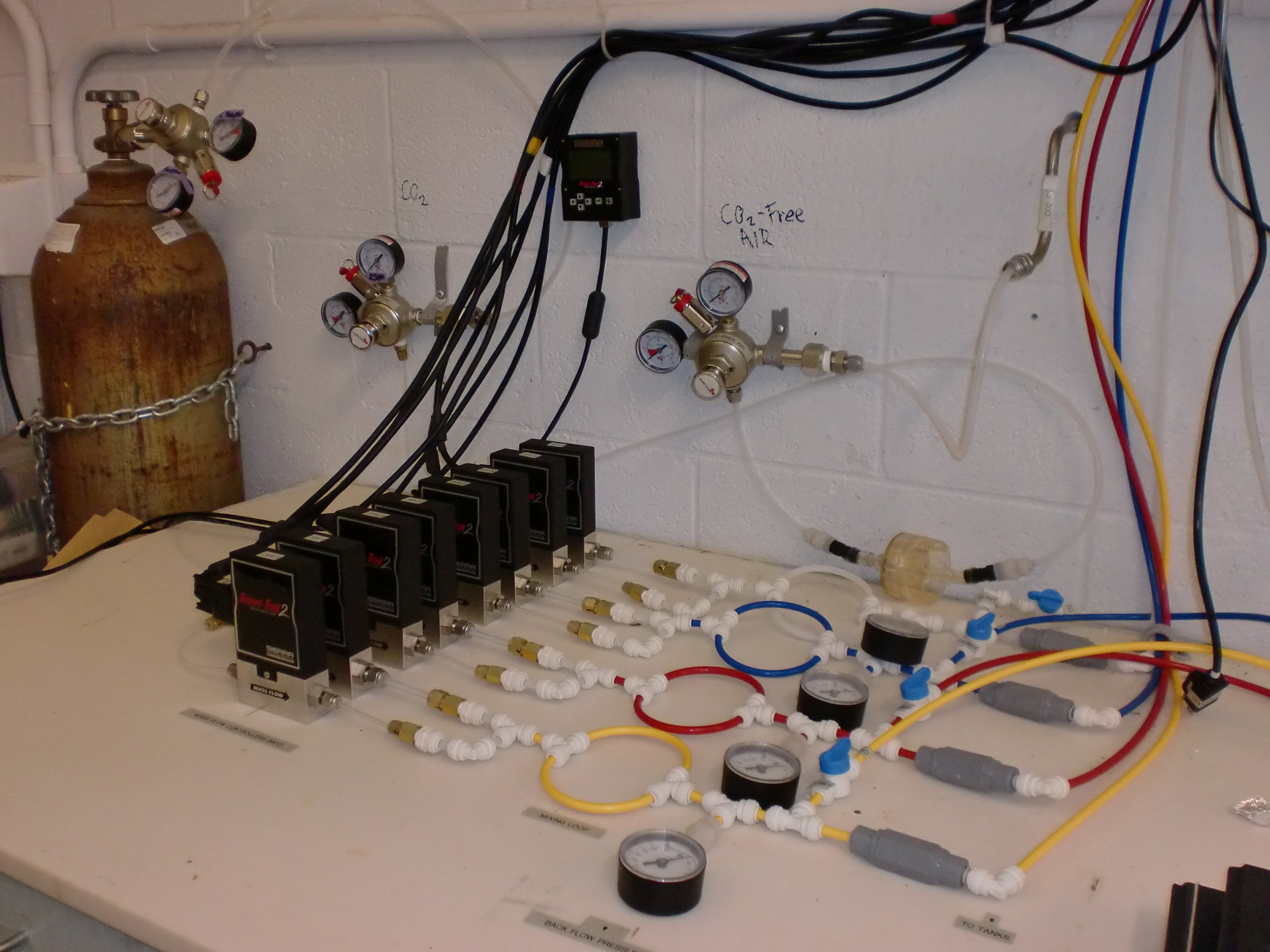
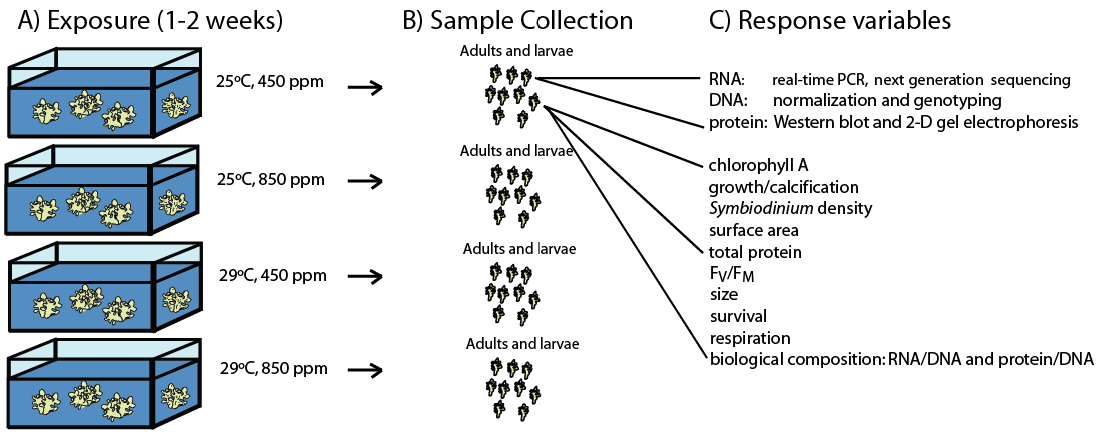
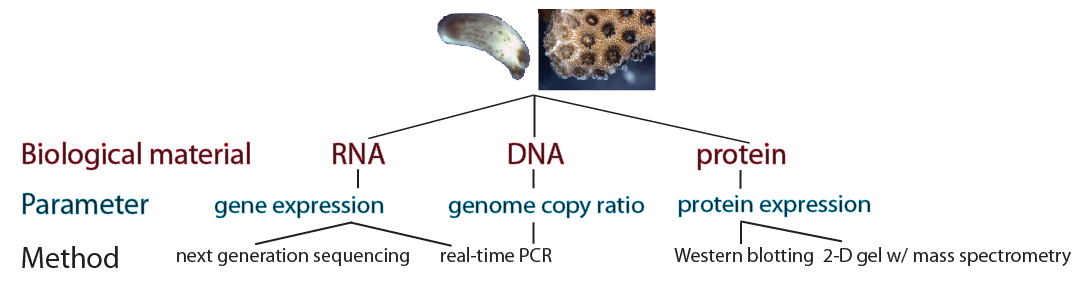
ChatGPT summary: This study investigated how larvae of the reef-building coral Pocillopora damicornis respond physiologically and molecularly to near-future climate change conditions, specifically elevated temperature and ocean acidification. Using a carefully controlled factorial experiment, the authors exposed brooded larvae from southern Taiwan to ambient or elevated temperature (25 vs. 29°C) and pCO2 (415 vs. 635 µatm) for nine days, then tracked responses from whole-organism physiology down to gene expression and protein levels.
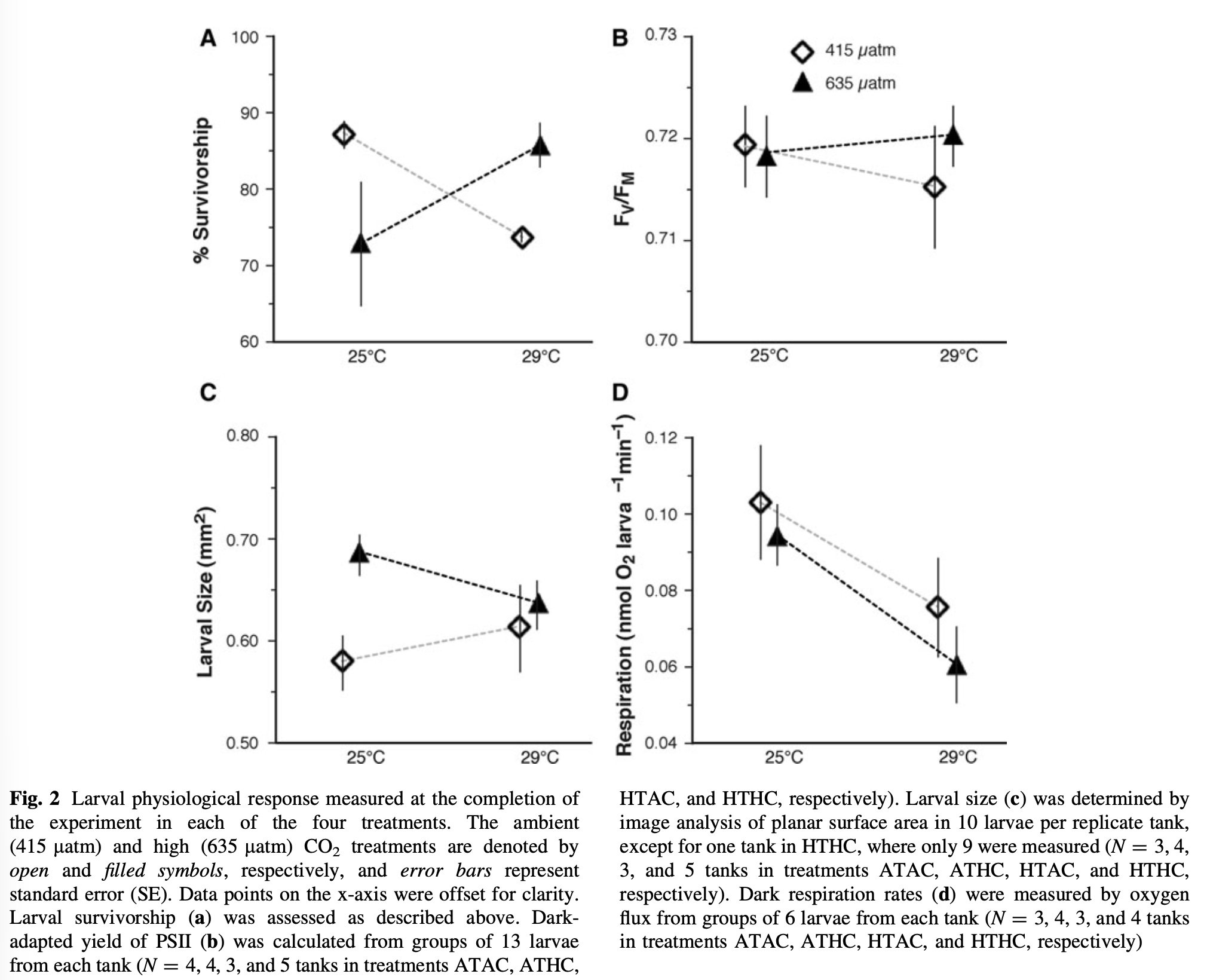
The results showed that elevated temperature had a far stronger effect than acidification: larvae exposed to warming exhibited suppressed respiration and a dramatic decline in expression of the photosynthetic protein RBCL, suggesting the onset of energetic stress despite the absence of obvious bleaching signatures. In contrast, elevated pCO2 had comparatively subtle effects, mainly increasing larval size. One of the paper’s major contributions was its integrative methodological framework, combining photophysiology, metabolism, quantitative PCR, and western blotting while also accounting for shifts in host-symbiont biological composition. The study ultimately argued that understanding coral resilience requires linking molecular mechanisms to organismal performance across biological scales, and it helped establish coral larvae as a critical but understudied bottleneck in predicting reef futures under climate change.
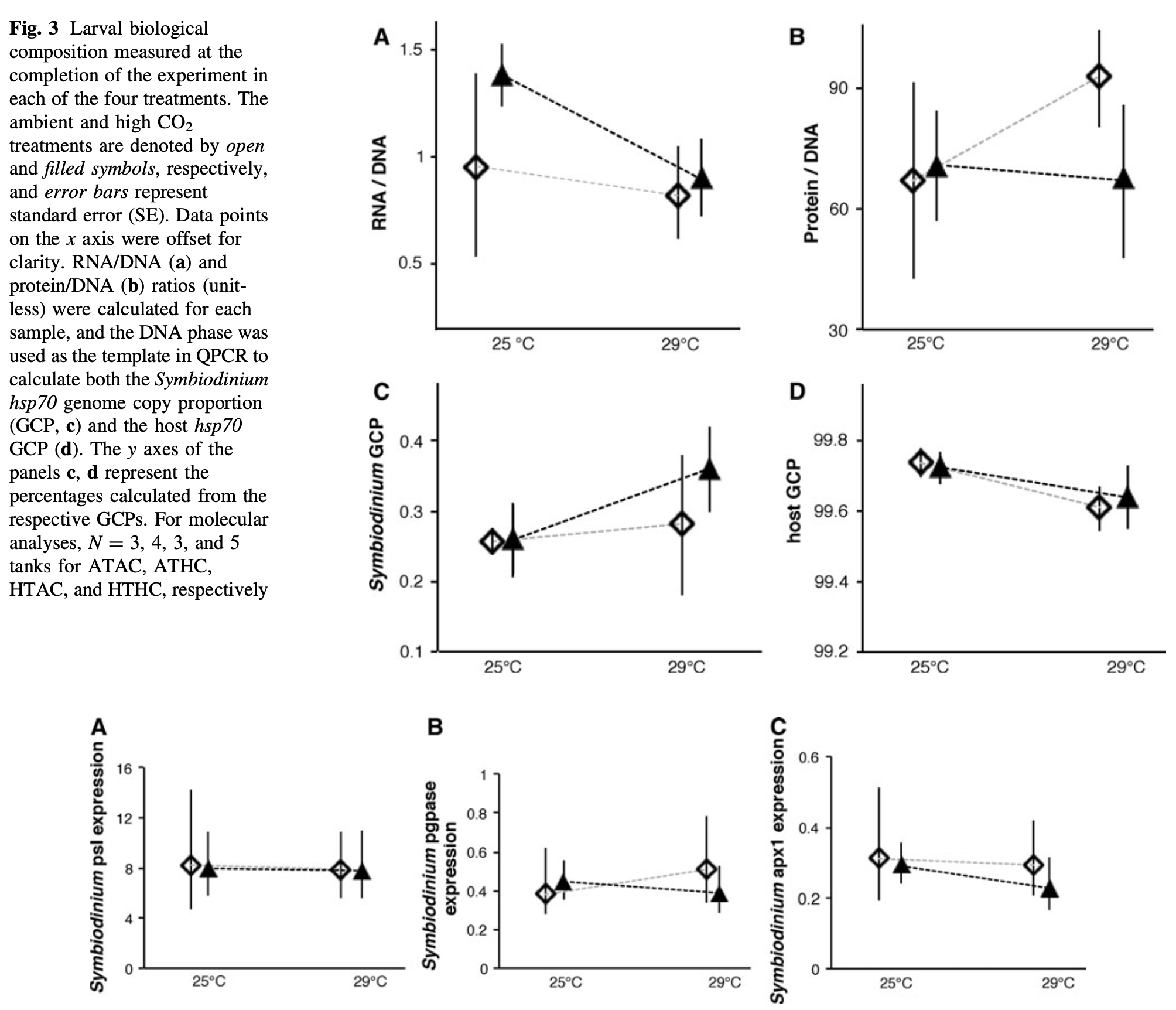
My version: This project was carried out with collaborator Dr. Hollie Putnam. The experiment is described in Putnam et al. (2013), and this publication also features some physiological and molecular data. We are now analyzing the transcriptomes of the larvae reared at control conditions (n=3), as well as those exposed to elevated temperatures and pCO2 levels for 1-2 weeks (n=3). If you are interested in the raw molecular data, please click here. To read details of the molecular biology methodology, please click here. For the interactive Pocillopora damicornis (later found to be the closely related sister species P. acuta) transcriptome server, please go here.
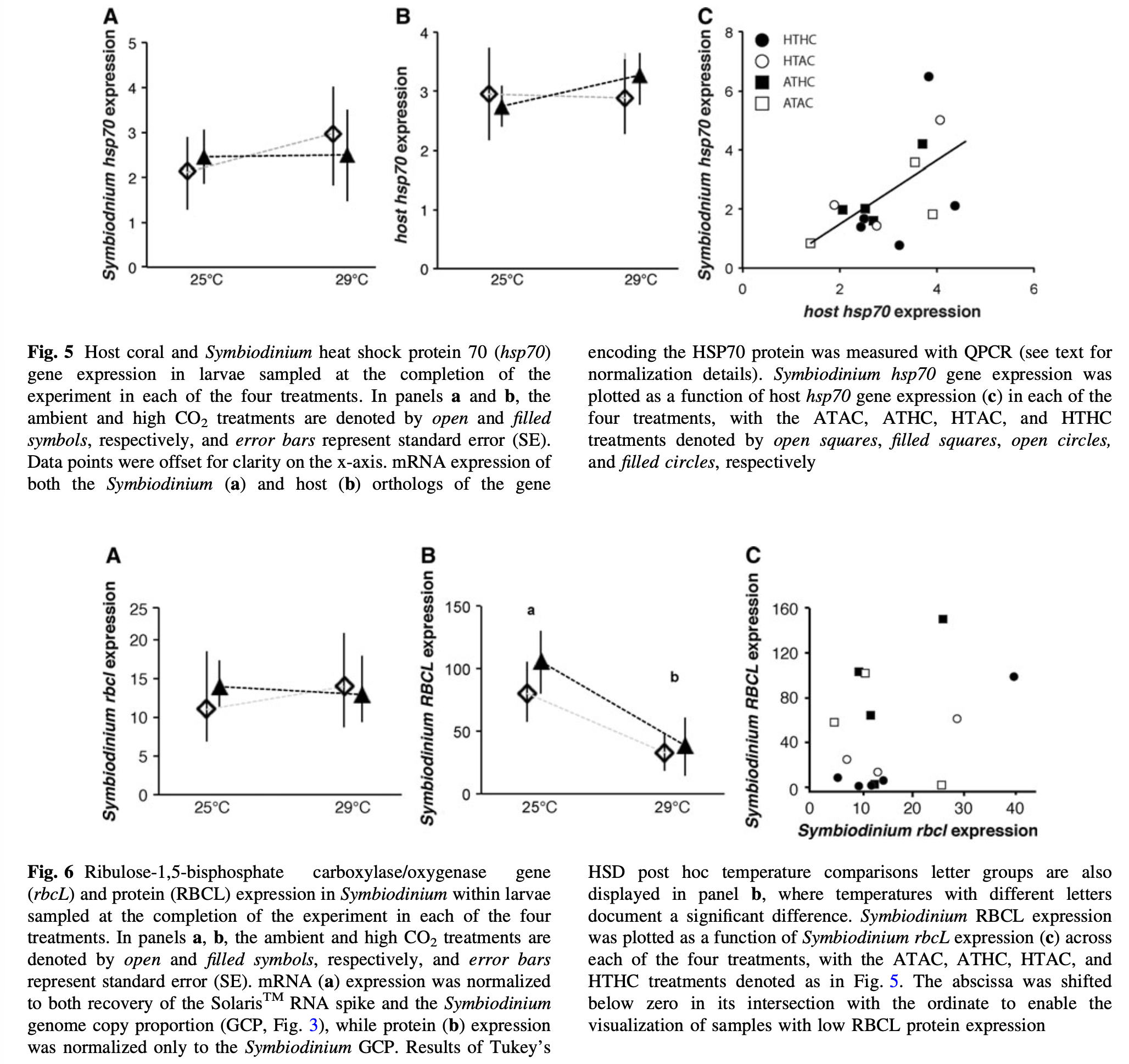
In retrospect, this paper was influential not because it showed dramatic coral bleaching or catastrophic collapse, but because it revealed how subtle and layered coral stress responses can be during early life stages. By integrating organismal physiology with gene and protein expression, the study helped bridge a long-standing gap between ecological performance and molecular mechanisms in coral biology. It also highlighted an important conceptual point that later became central in coral climate-change research: transcriptomic stability does not necessarily mean physiological stability, and protein-level regulation may ultimately provide a more direct window into stress tolerance and energetic state. The work further emphasized that larval corals deserve special attention, since recruitment and early survivorship represent critical bottlenecks for reef persistence under climate change.
The legacy of the paper lies in both its methodology and its perspective. Methodologically, it was among the earlier coral studies to combine multi-level physiological and molecular assays while explicitly accounting for the biological composition of the coral holobiont during normalization and analysis. Conceptually, it helped move the field away from viewing ocean acidification and warming as uniformly catastrophic across all life stages and instead toward a more nuanced understanding of life-stage-specific vulnerability, acclimation, and energetic tradeoffs. The finding that warming exerted stronger impacts than acidification on coral larvae also anticipated a growing consensus in reef science that thermal stress remains the dominant near-term threat to coral reef persistence. More broadly, the paper contributed to the emerging systems-biology view of corals as tightly integrated host-symbiont partnerships whose responses to climate change can only be understood across multiple biological scales simultaneously.