2017-February dive 4: “Karpata”

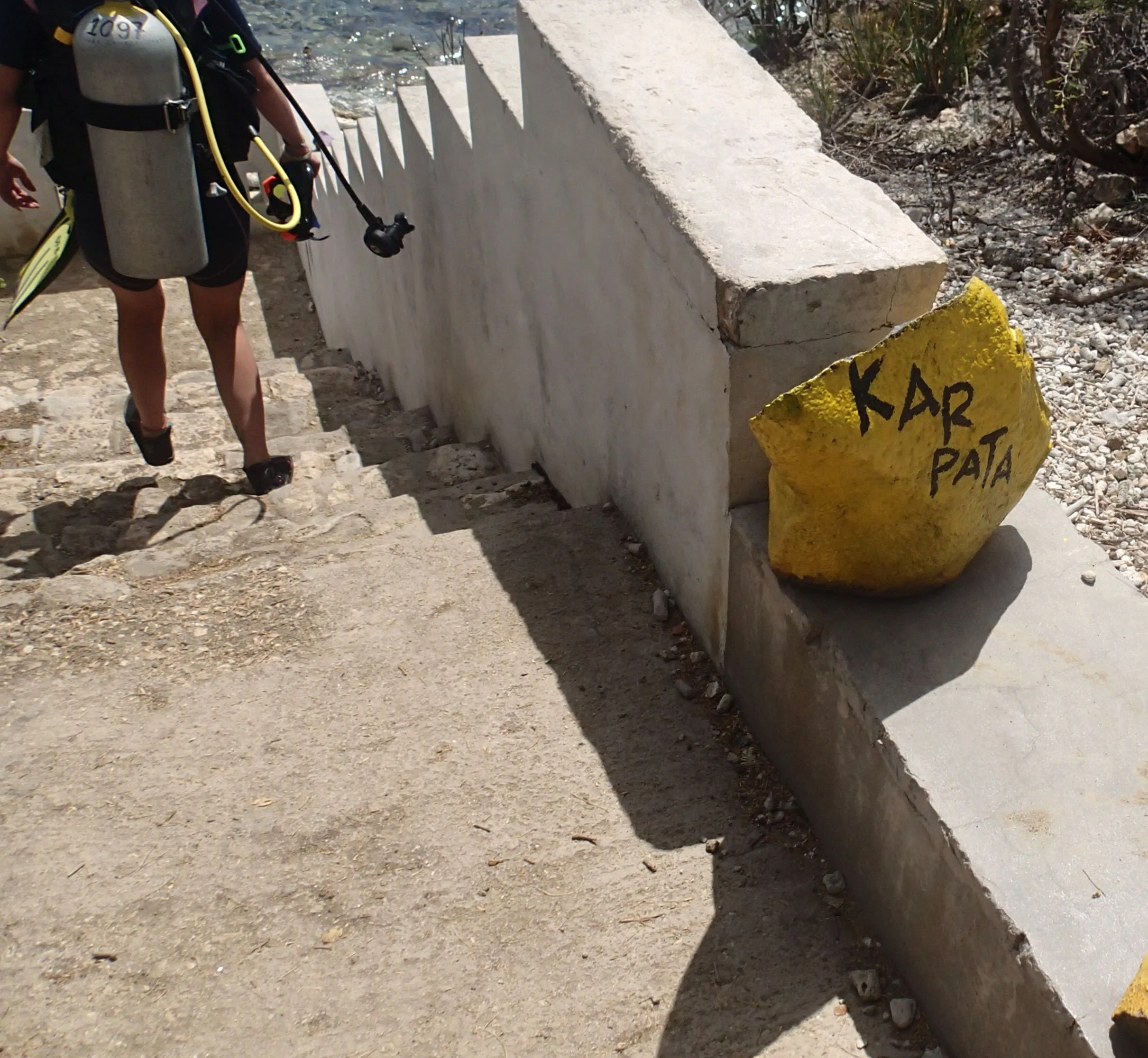
Karpata, Bonaire
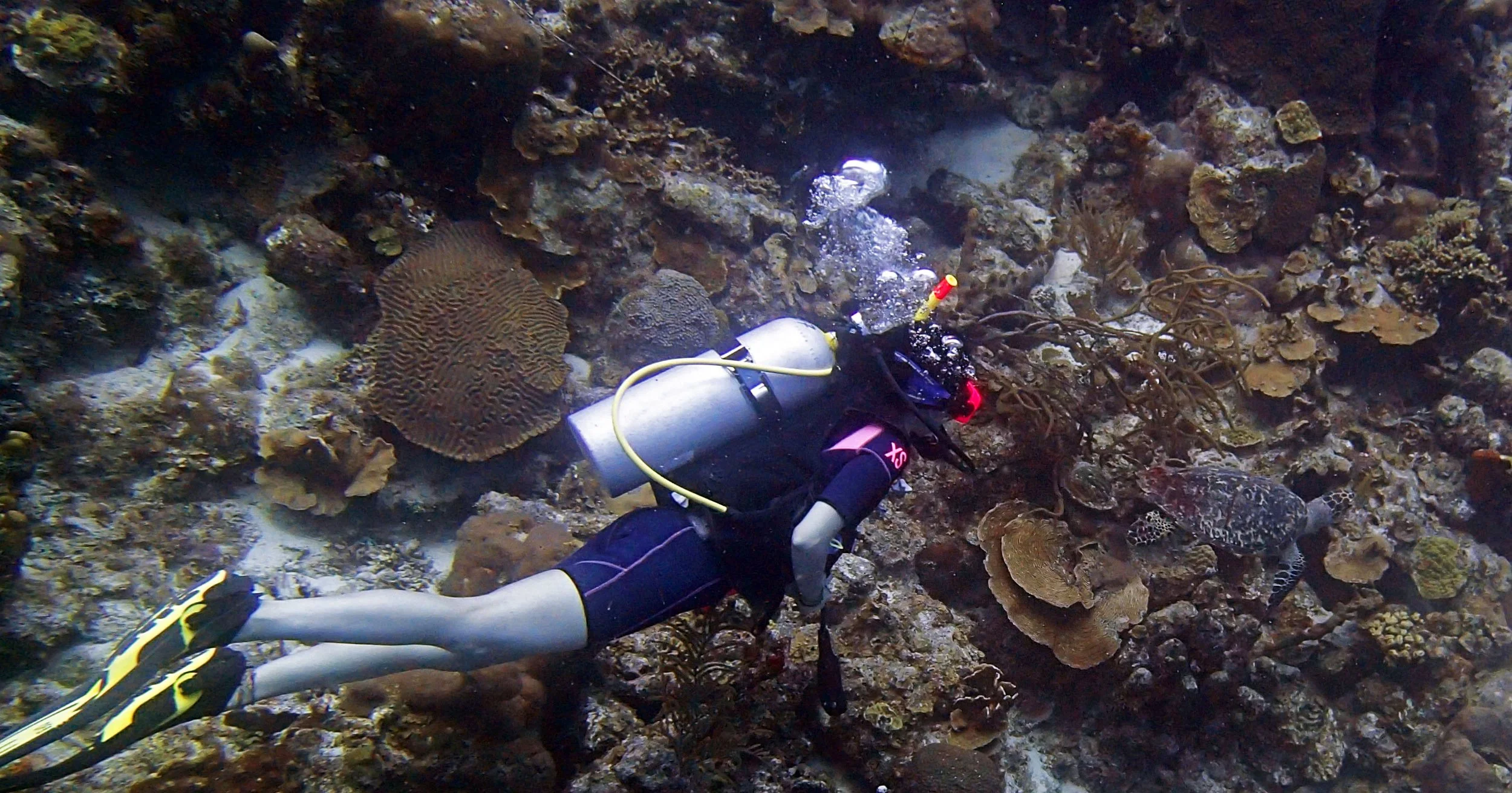
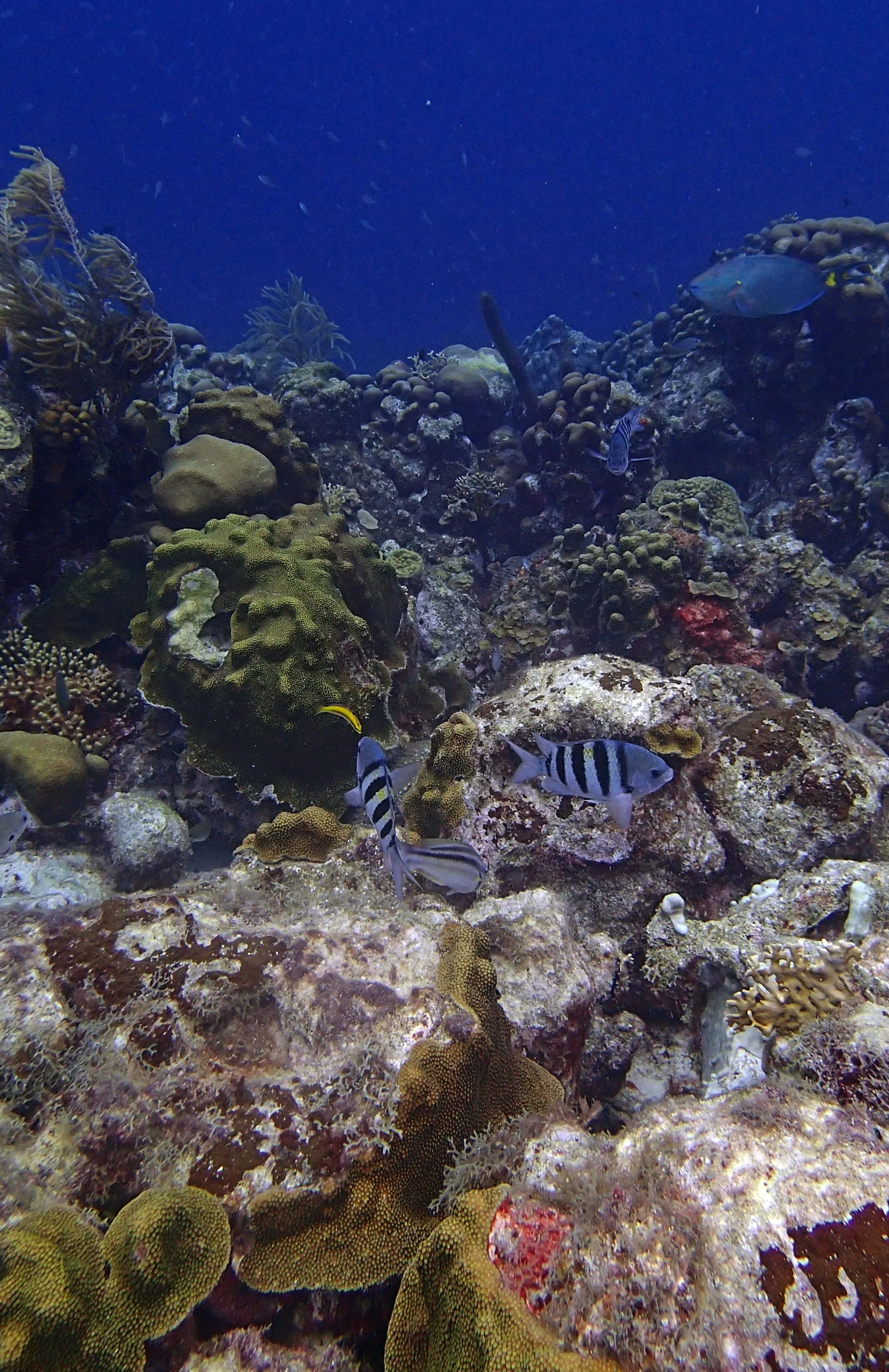
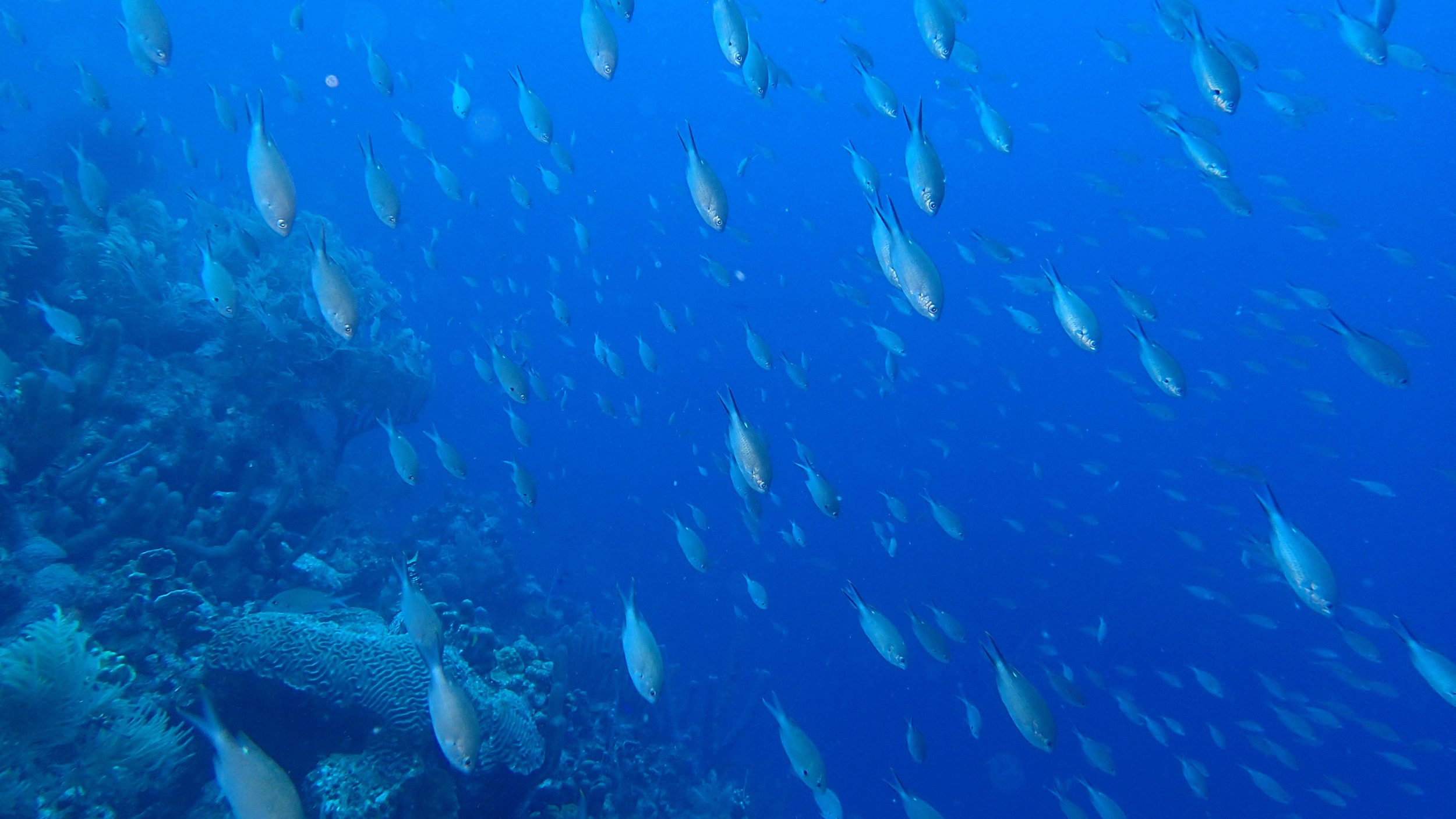
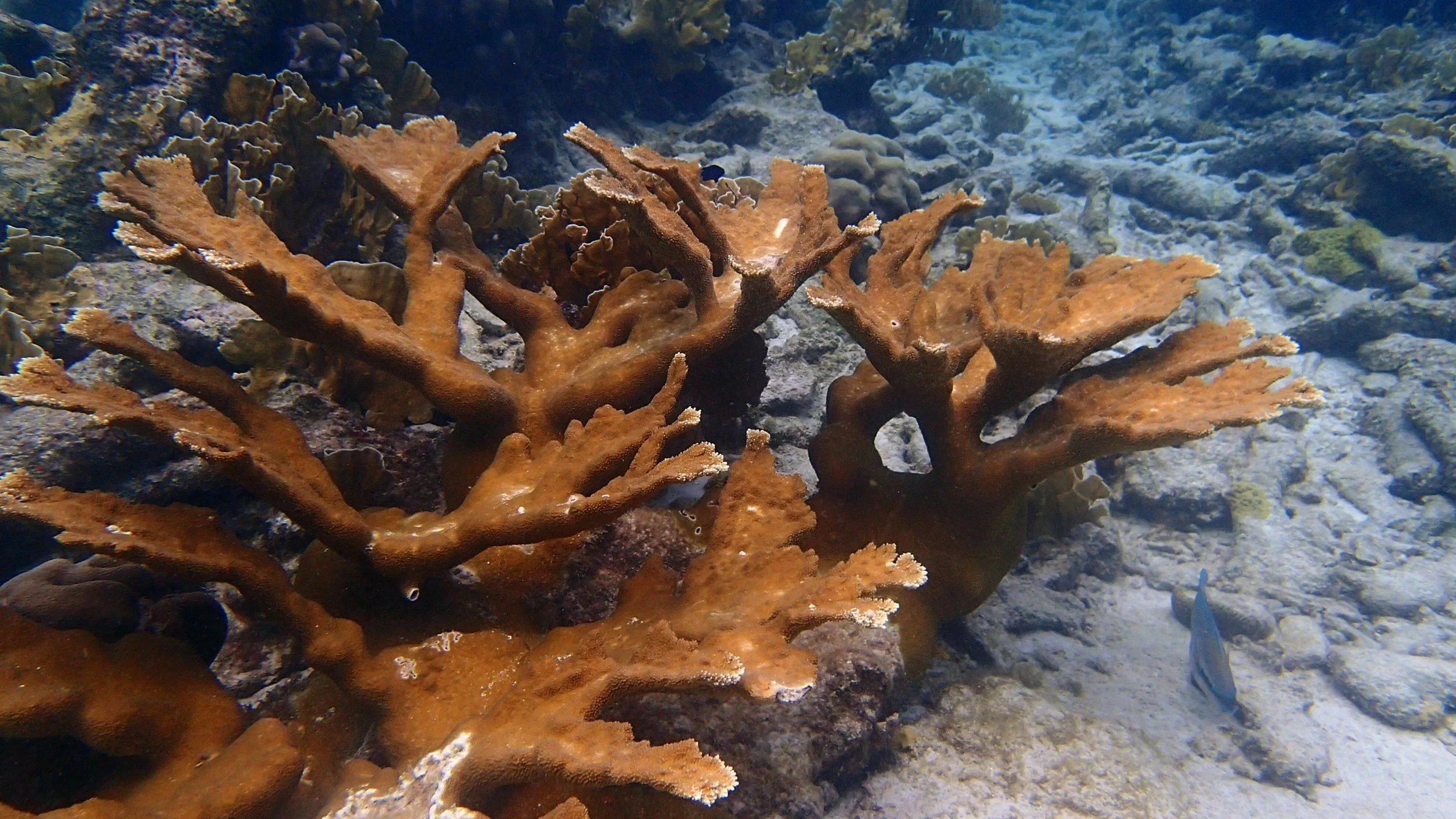
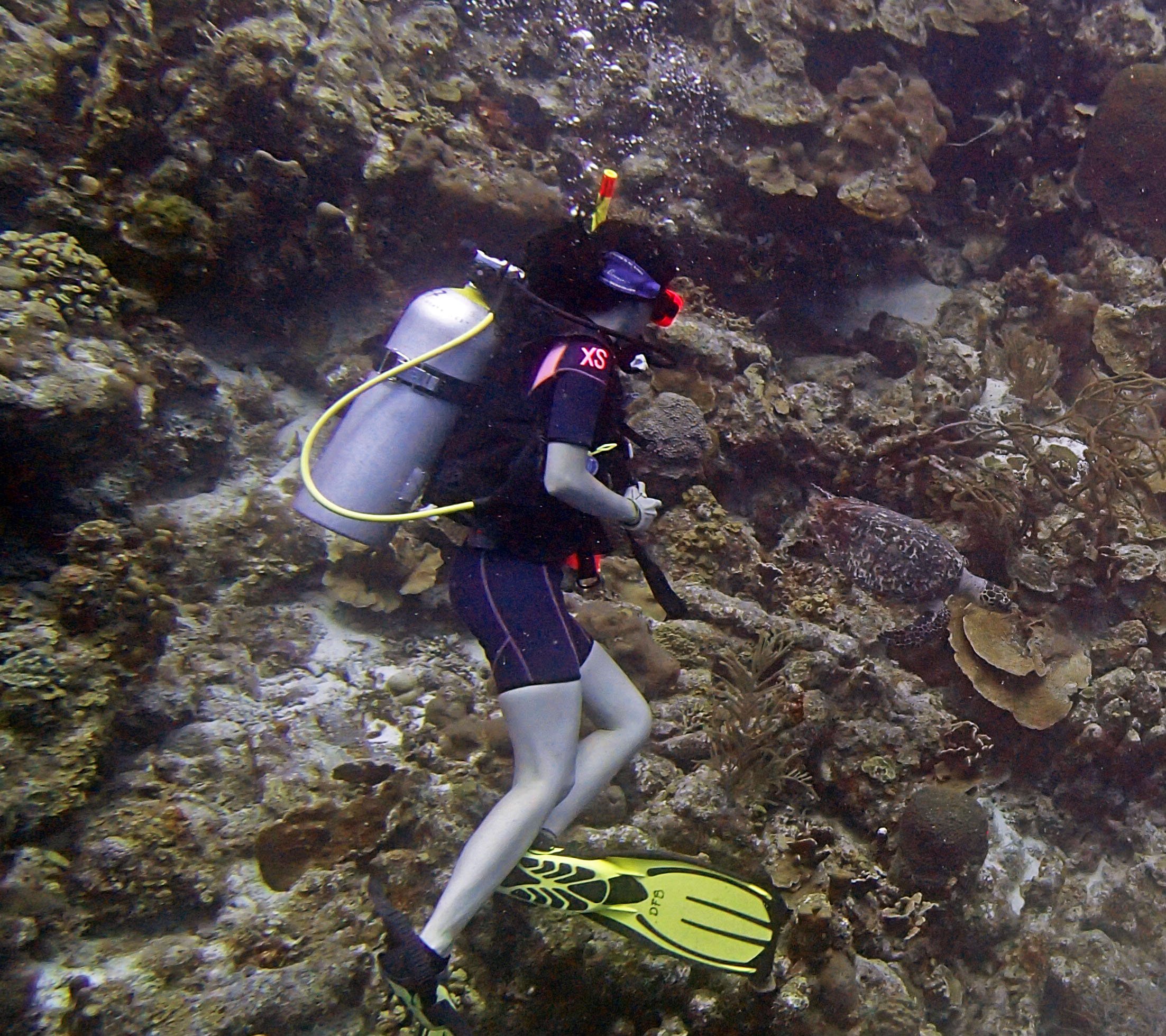
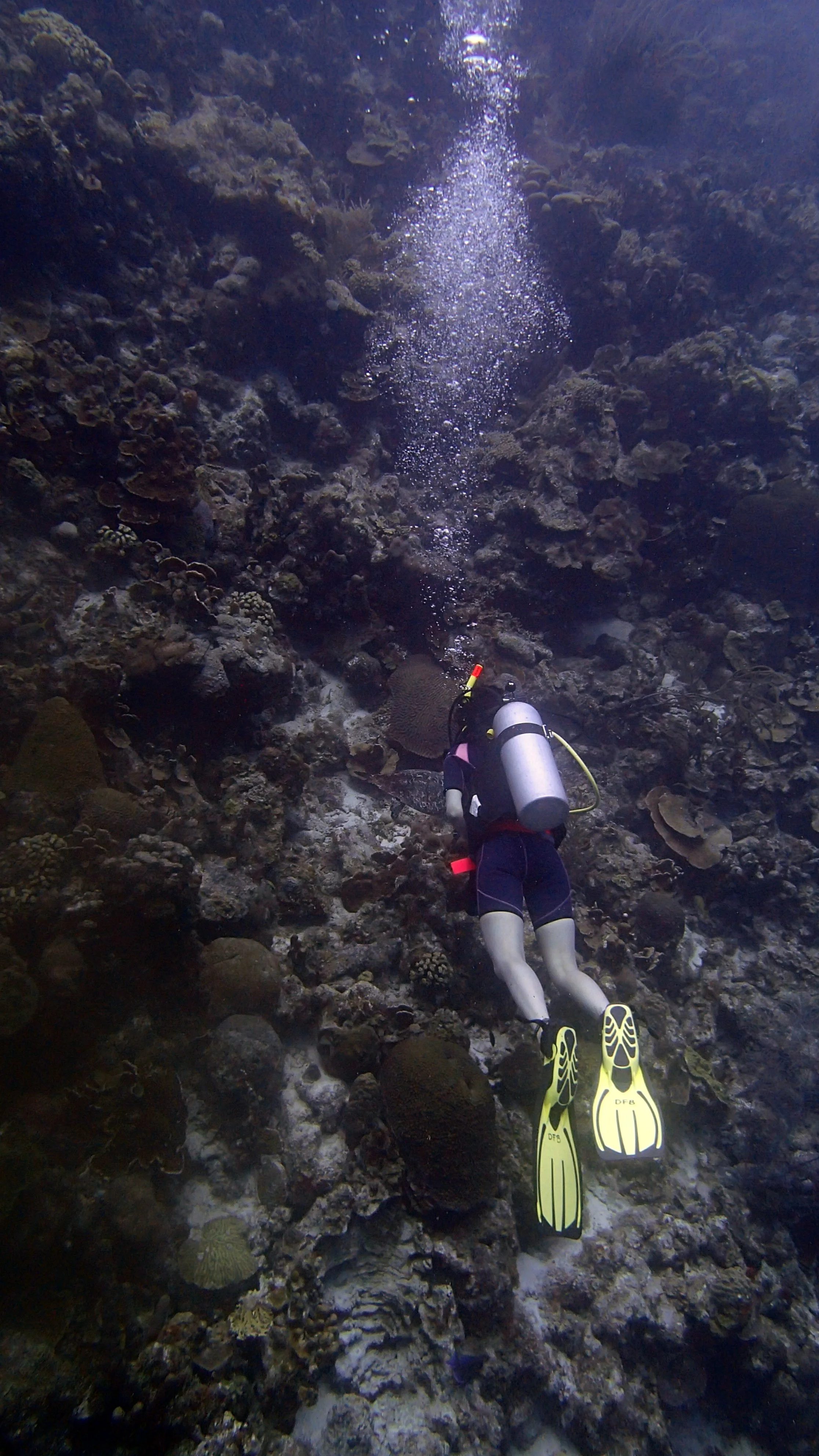
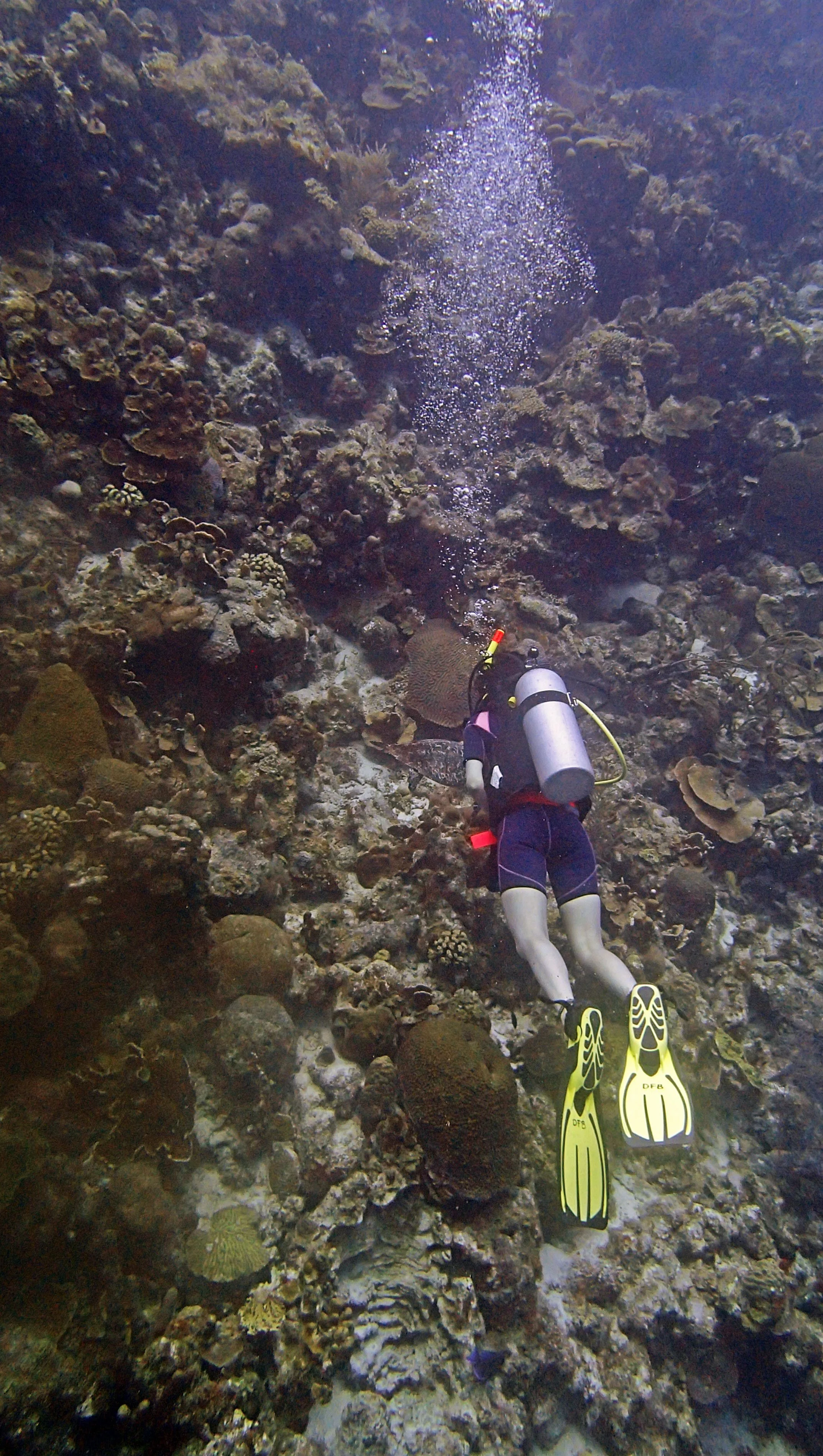
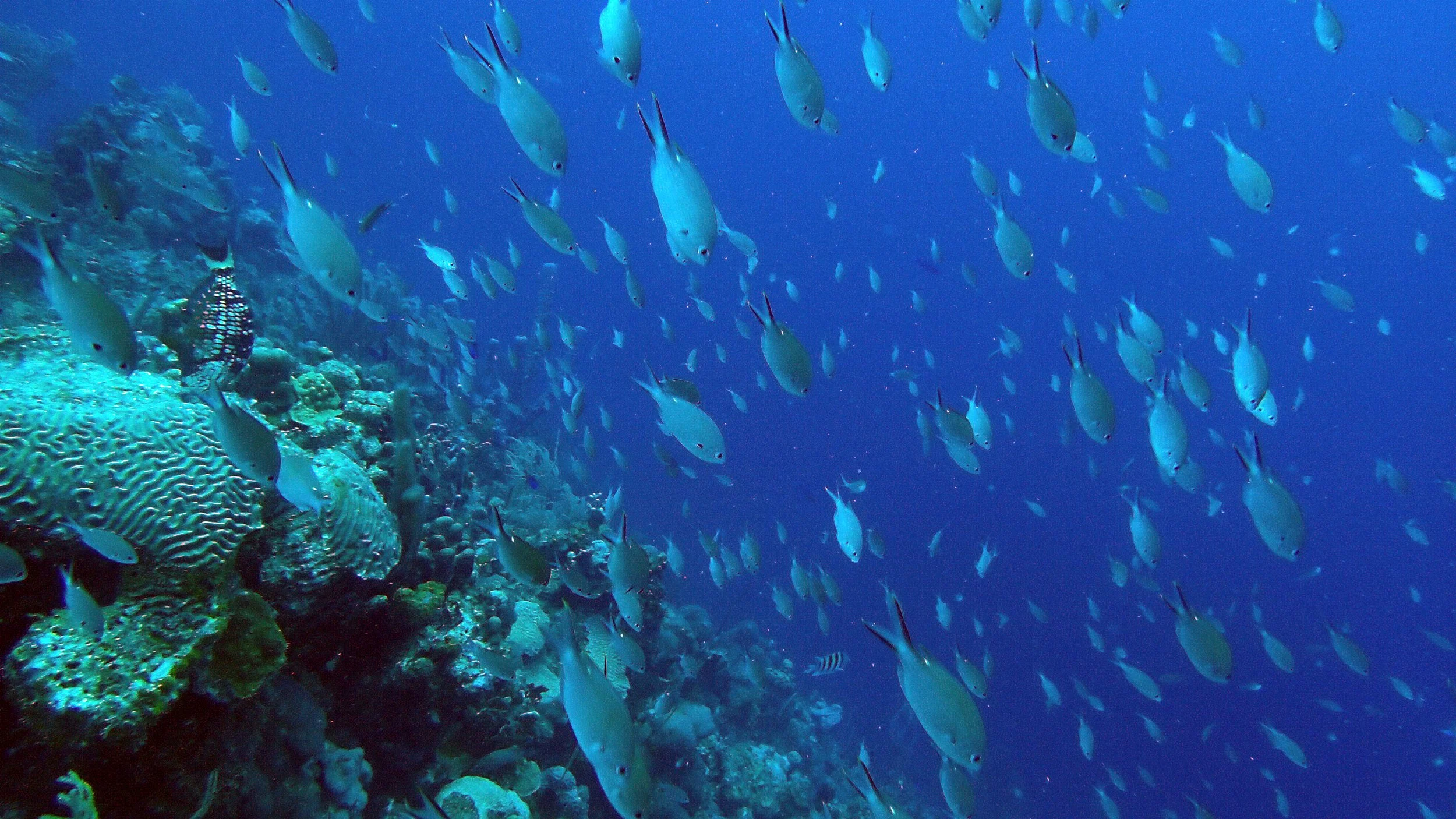
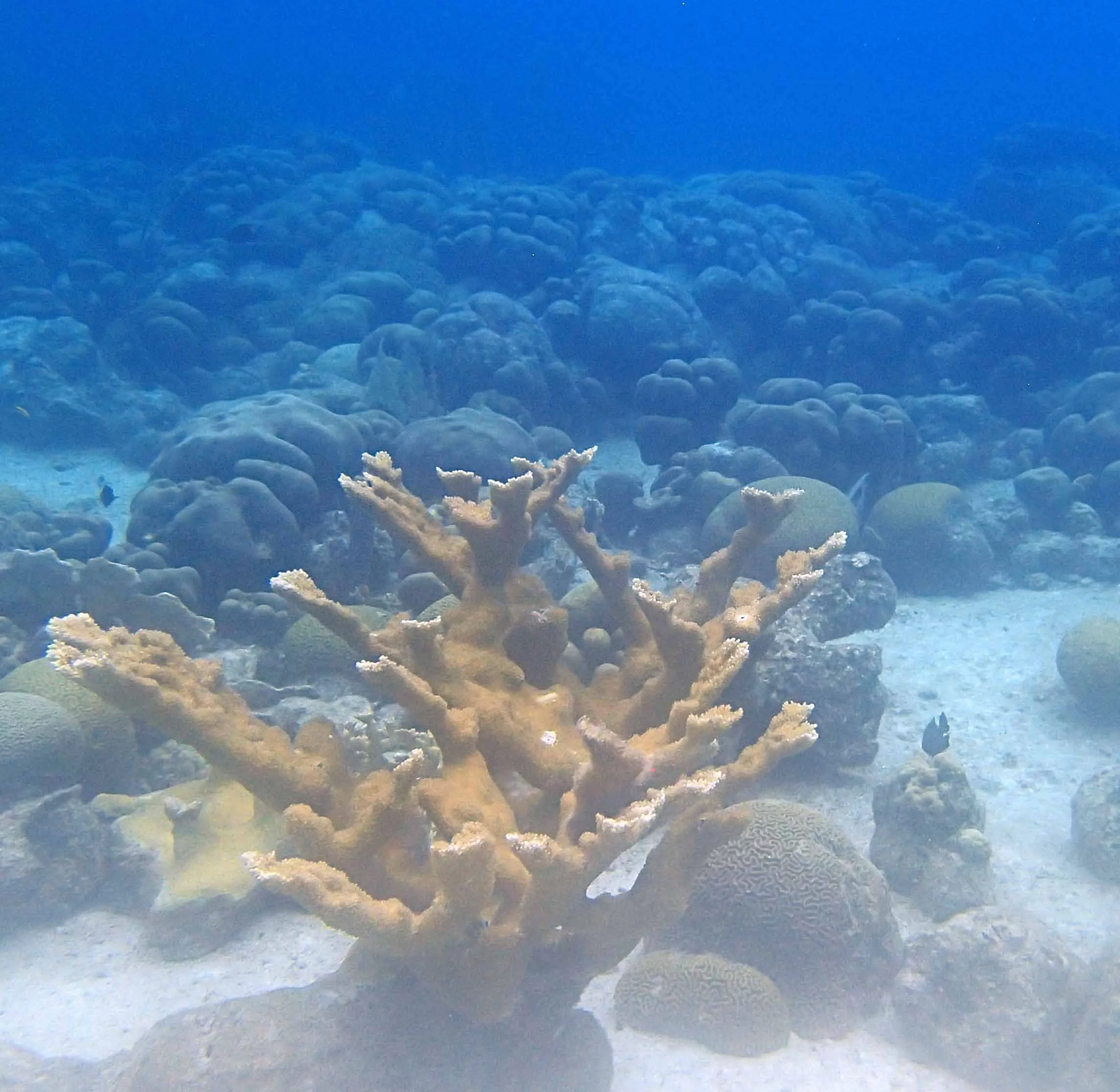
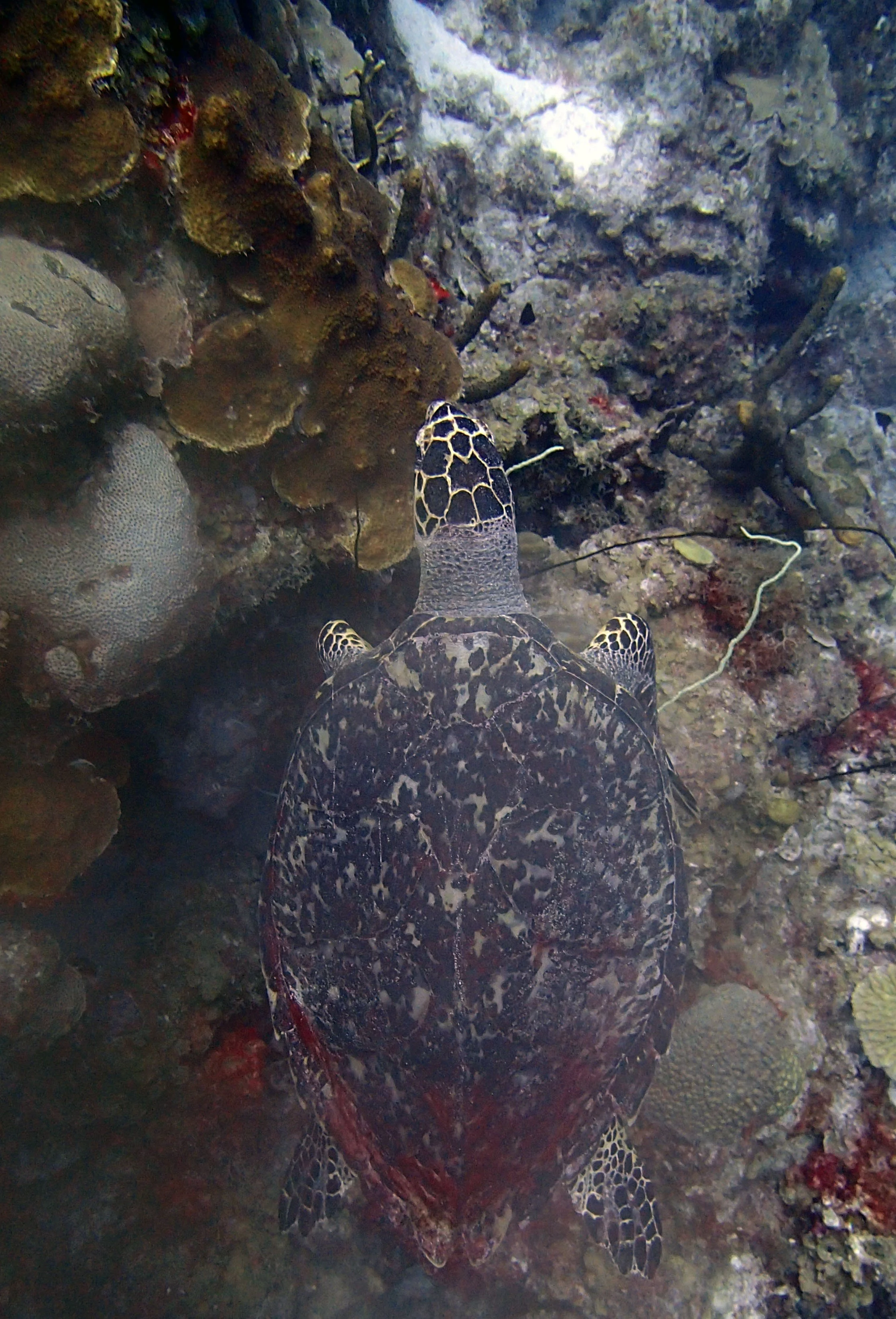
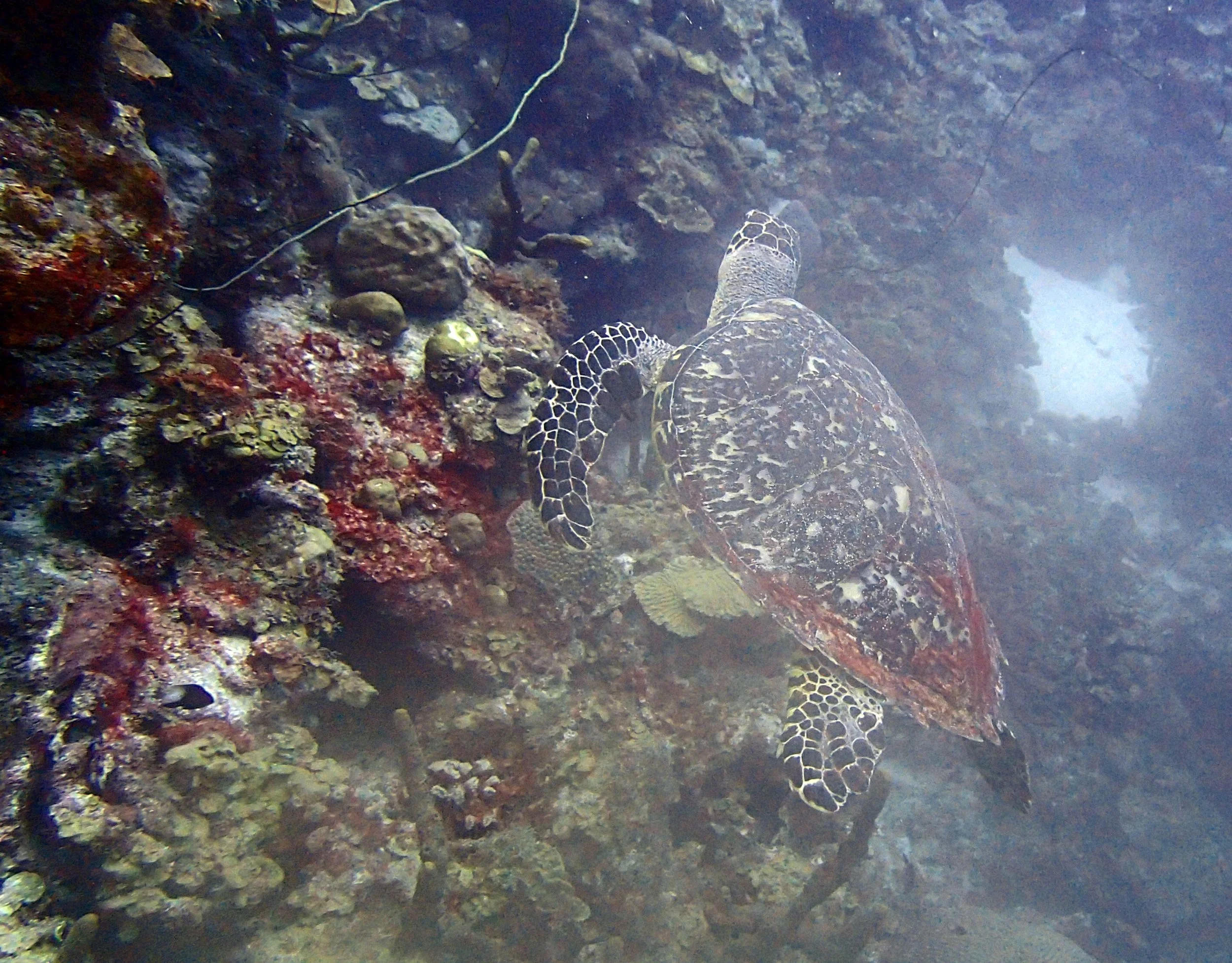
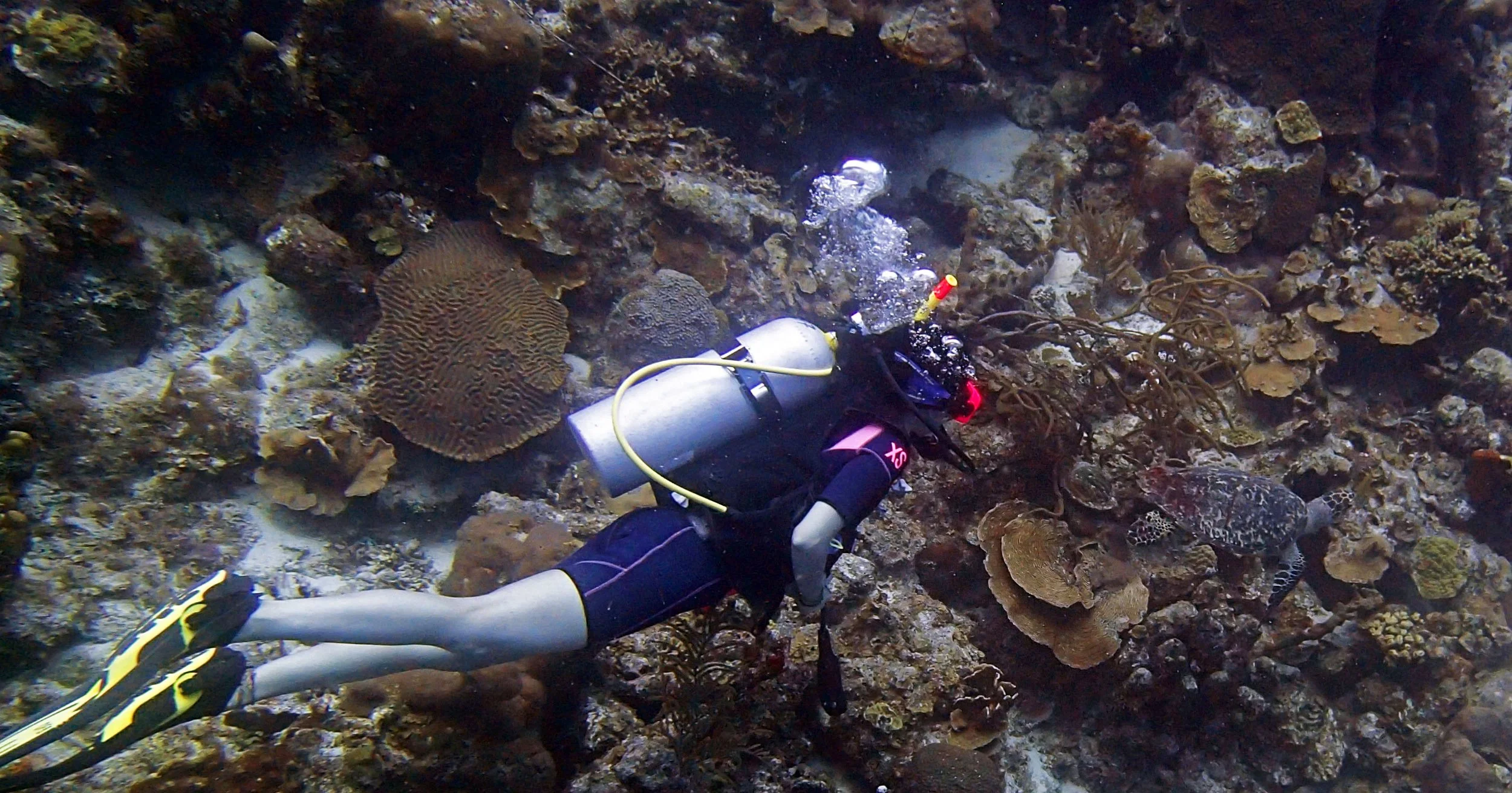
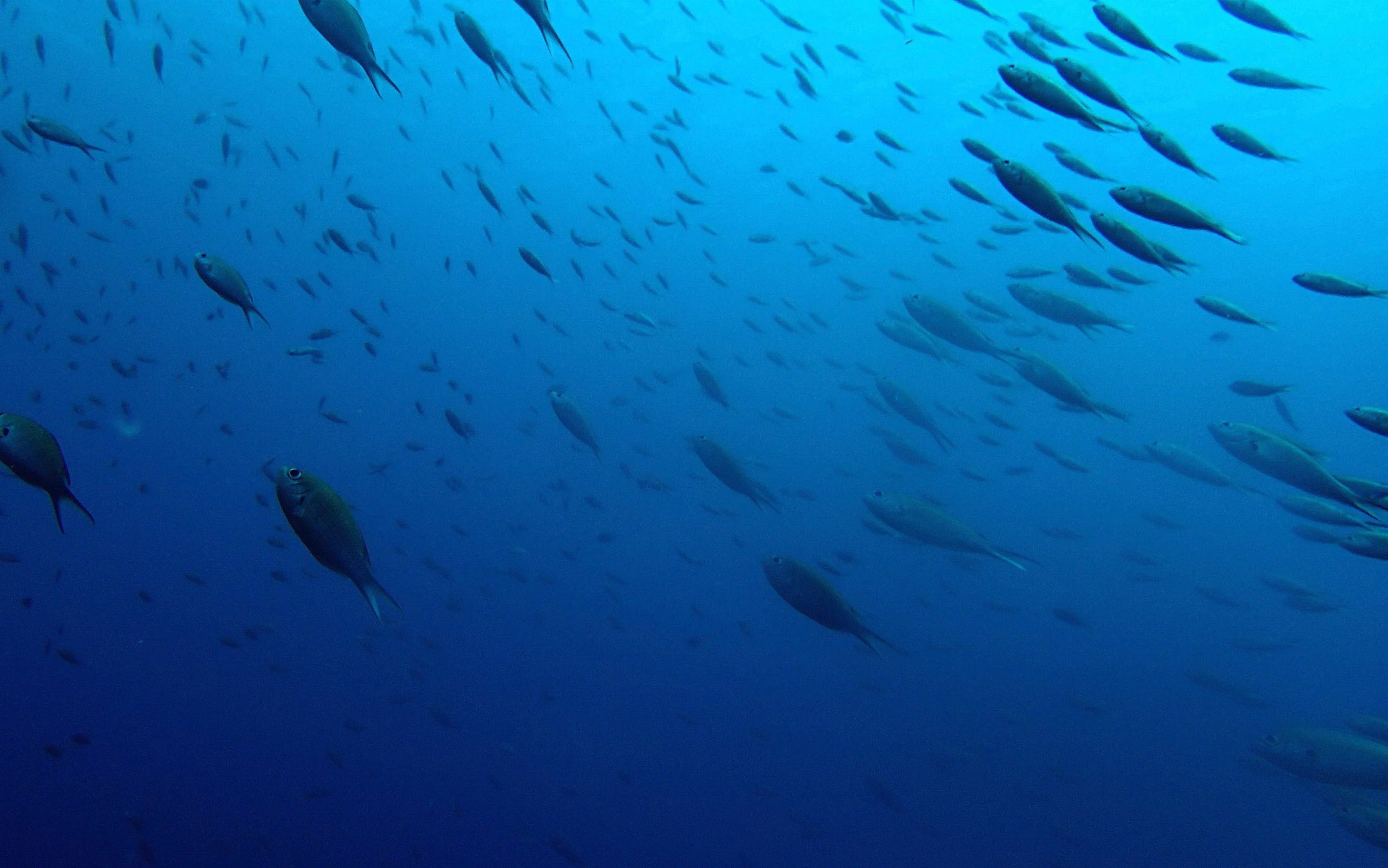
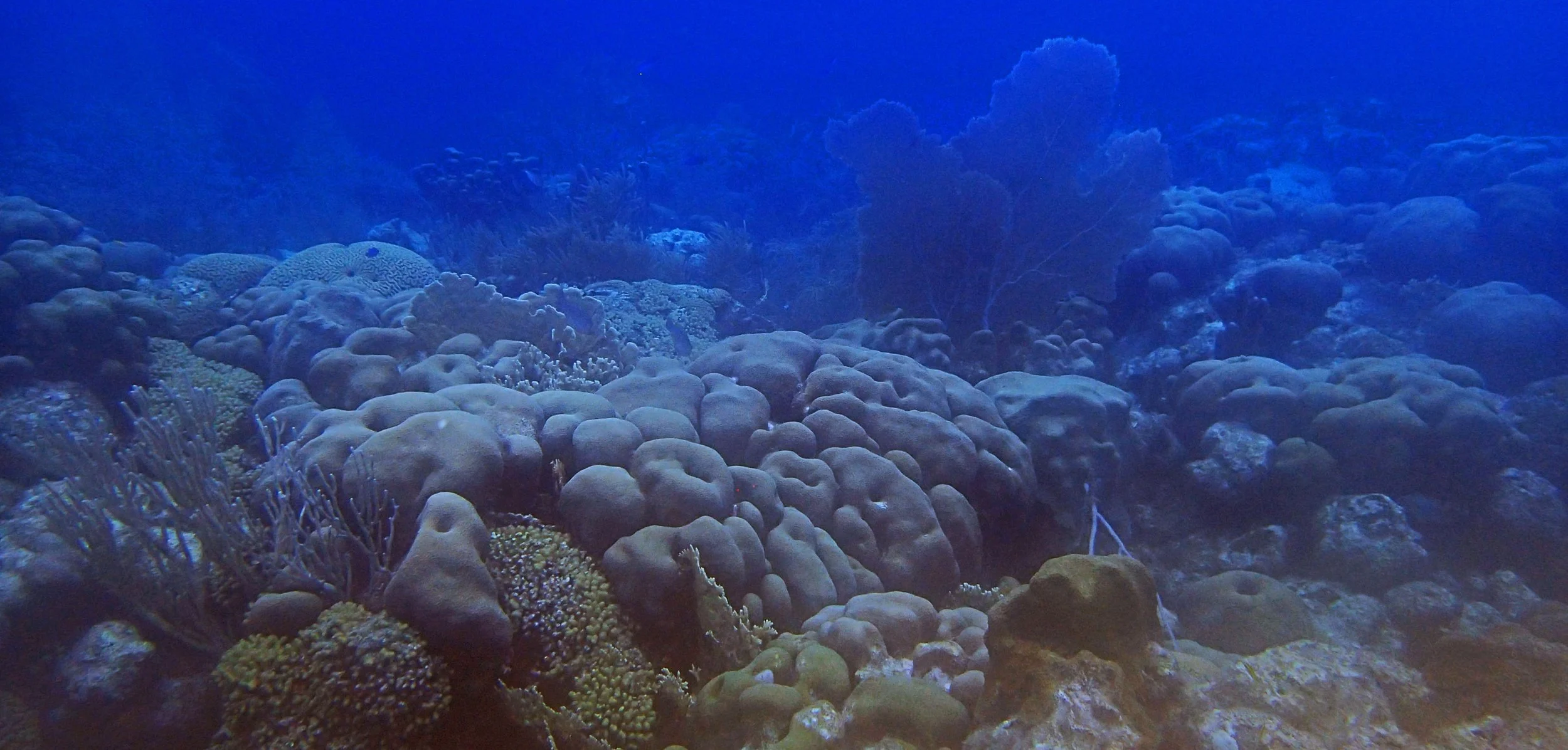
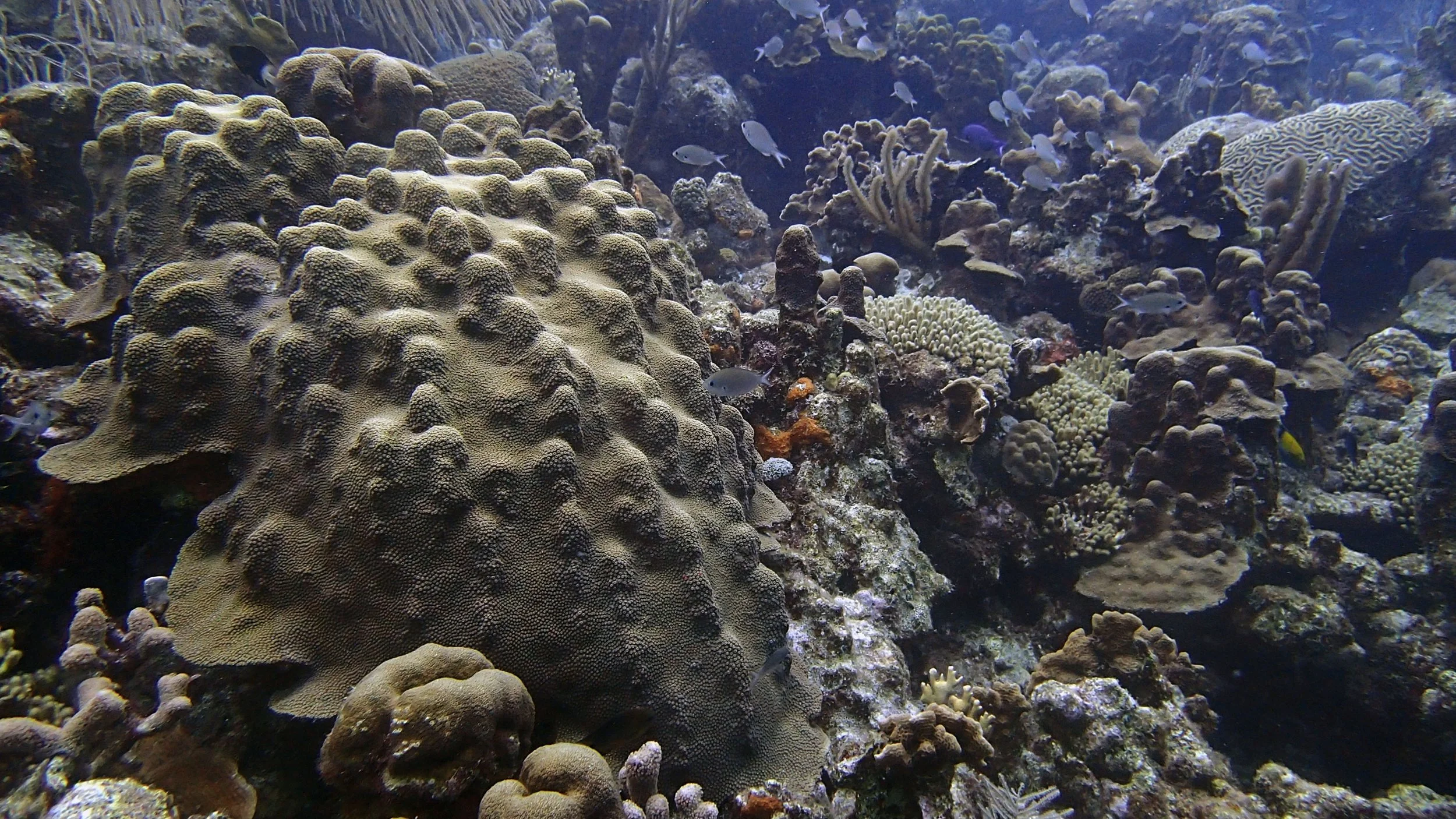
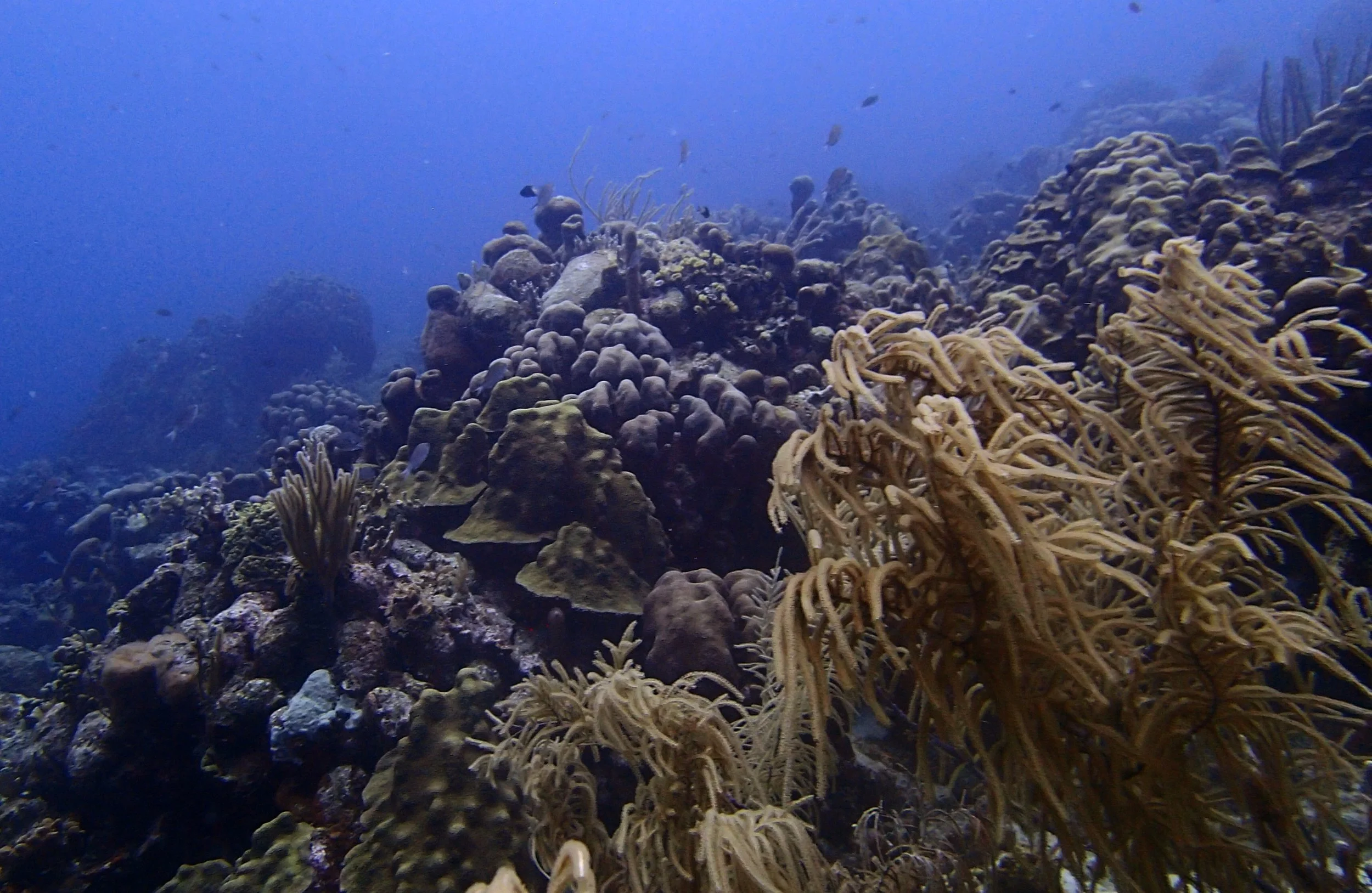
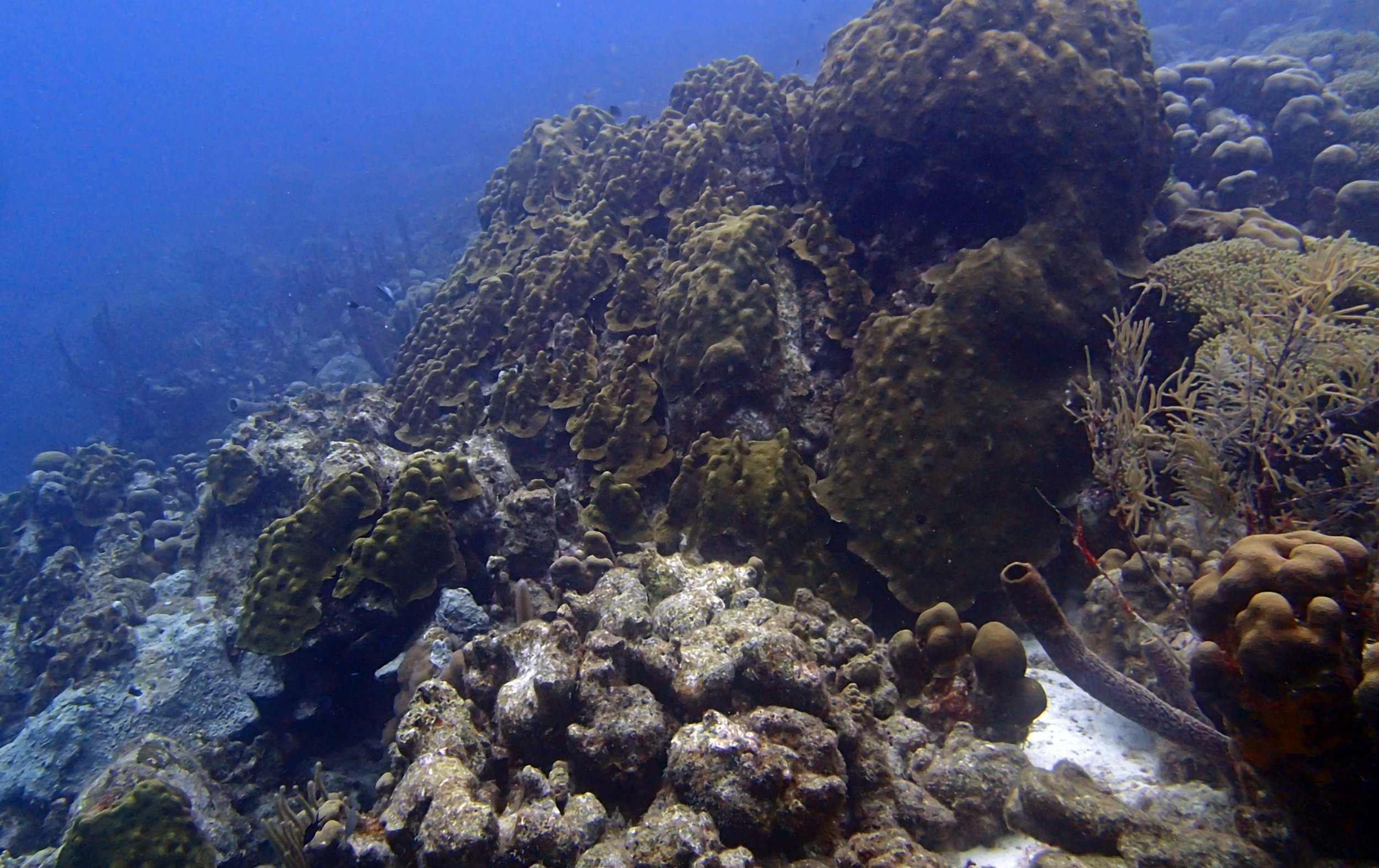
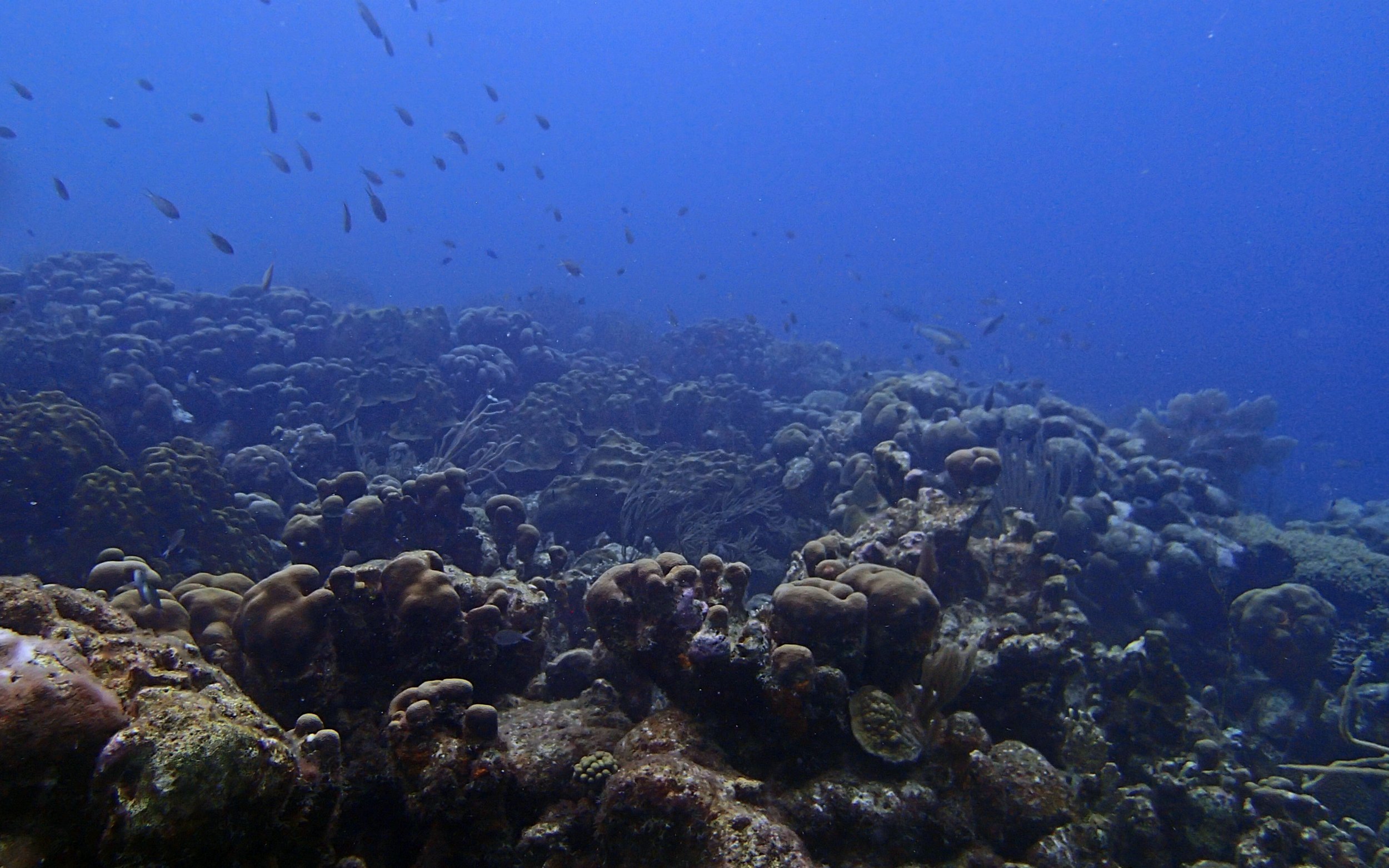
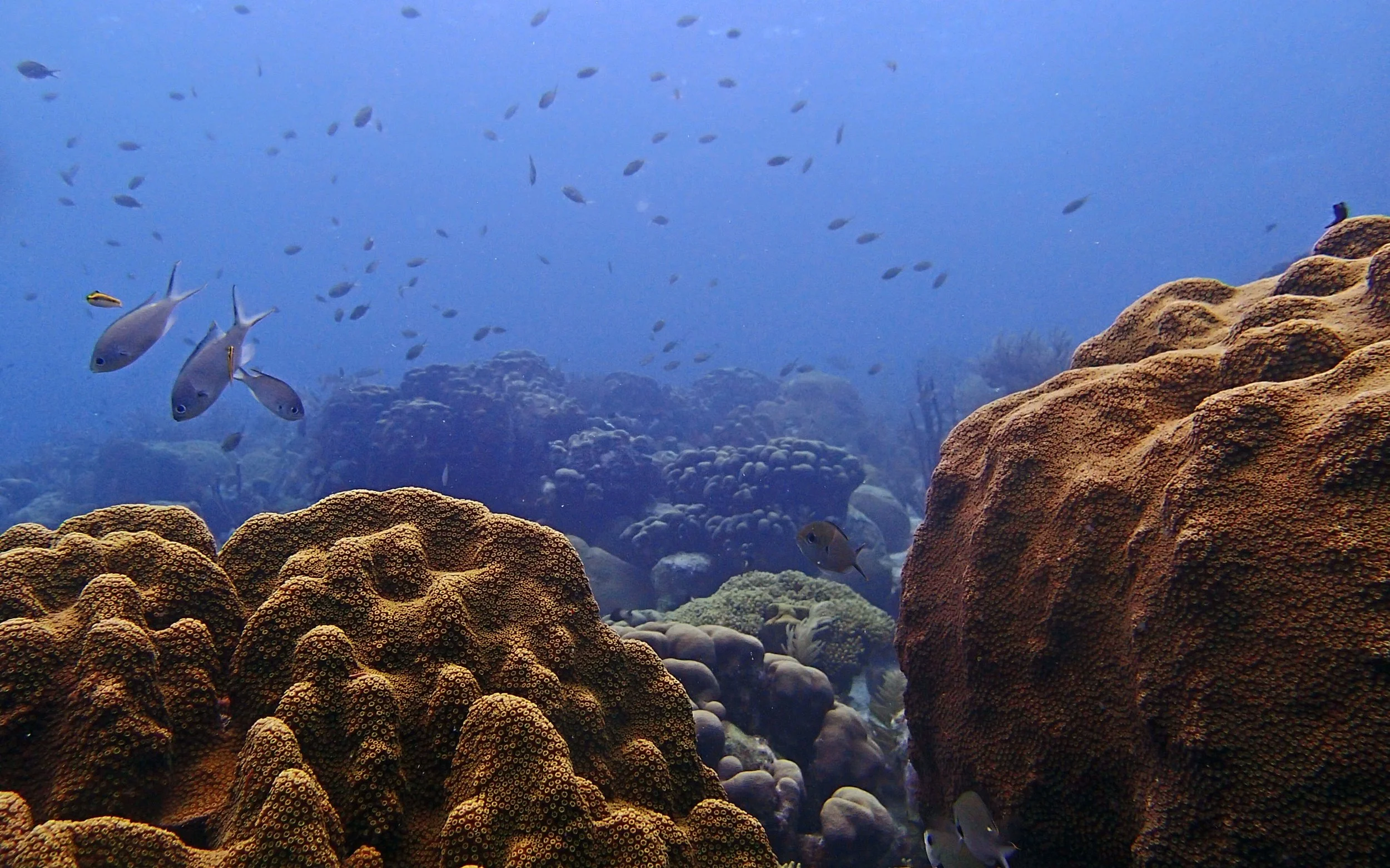
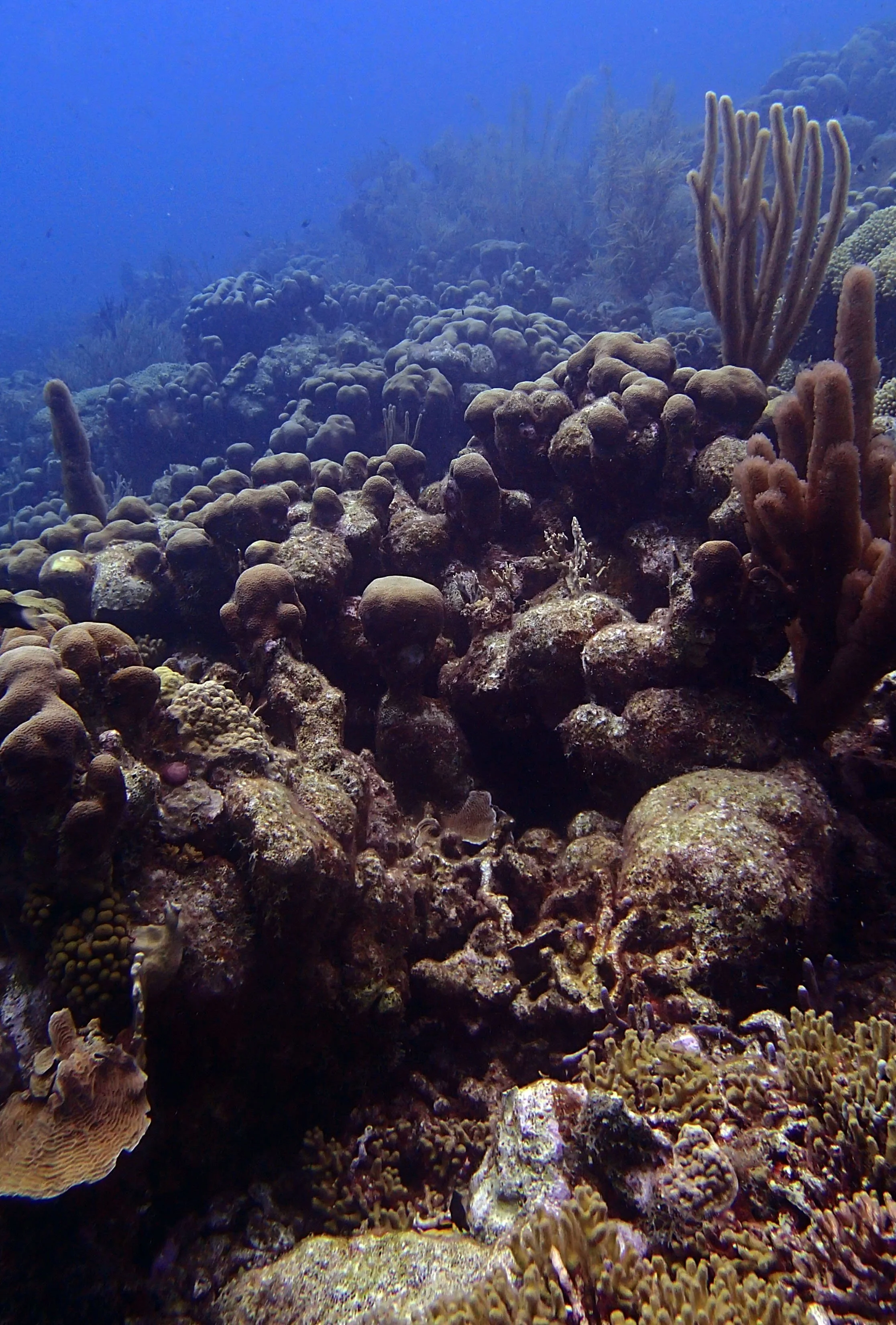
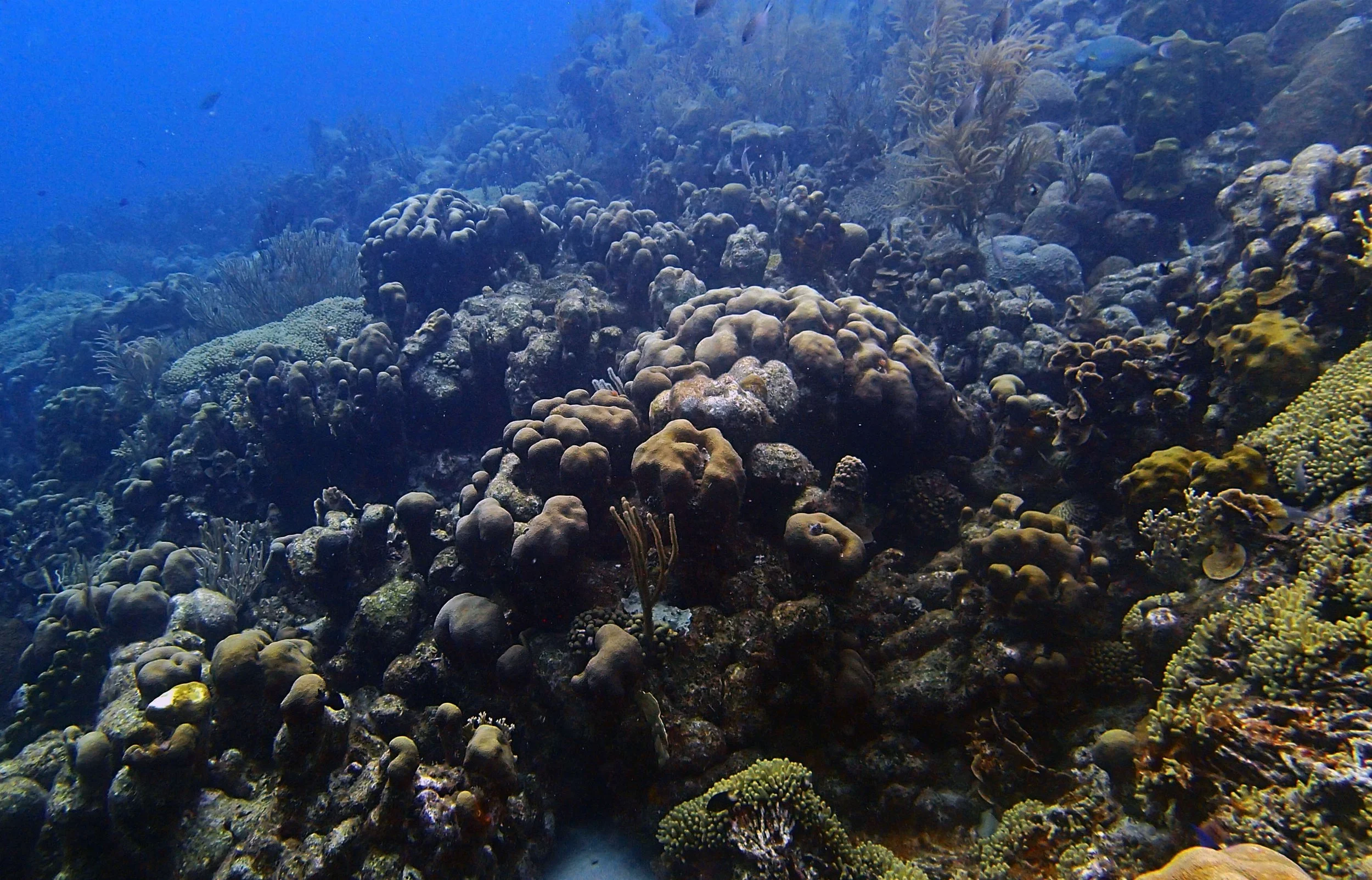
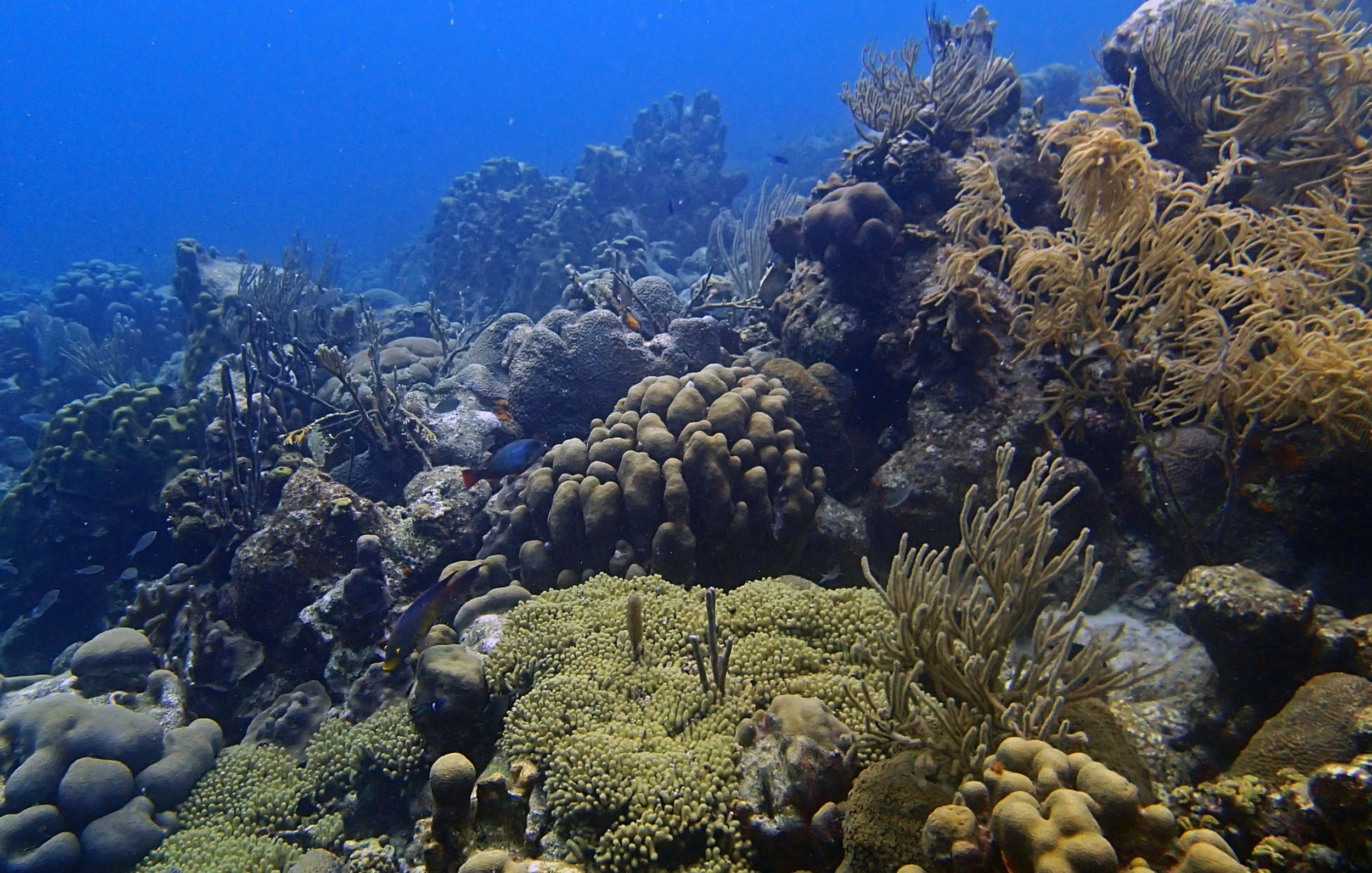
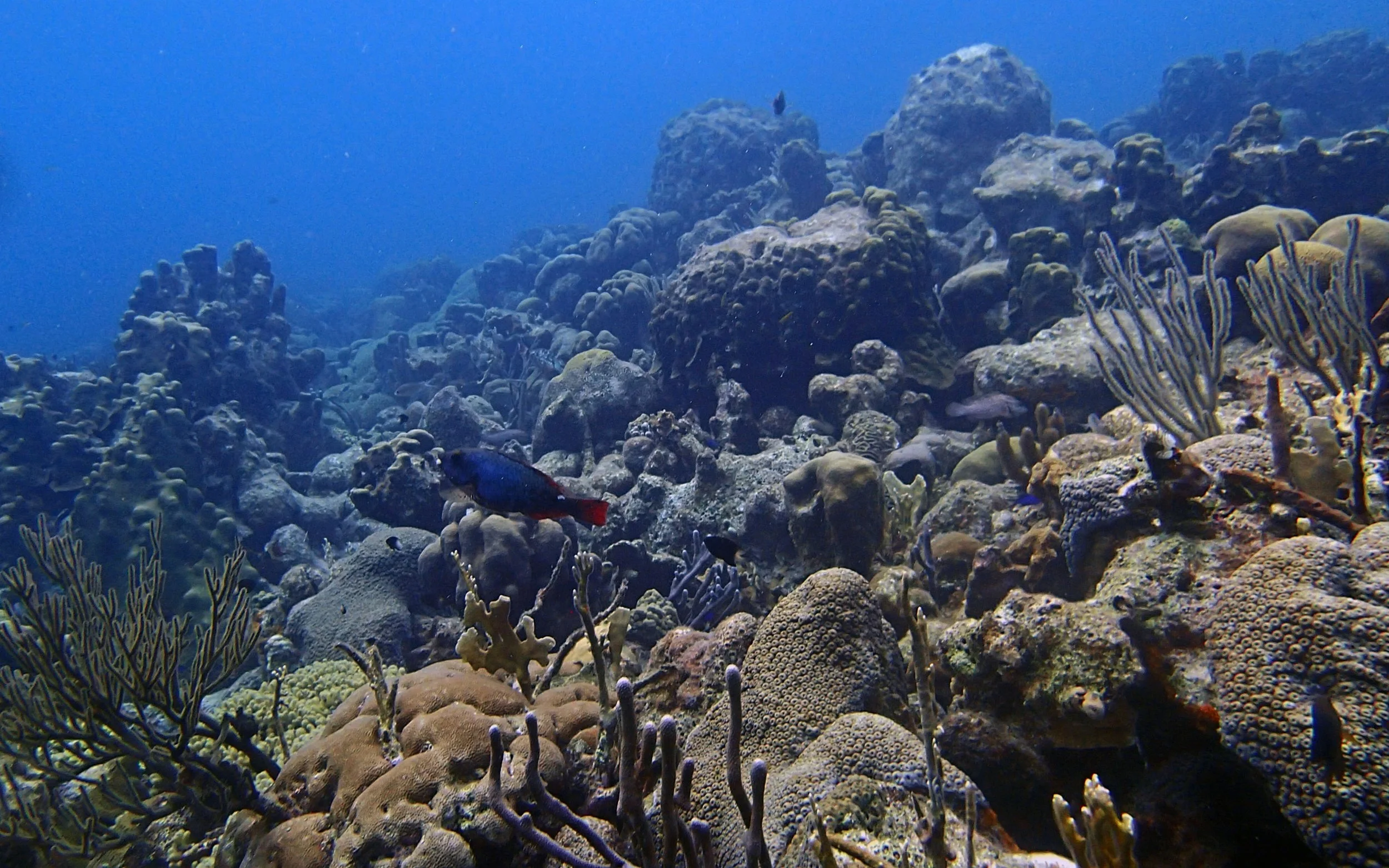
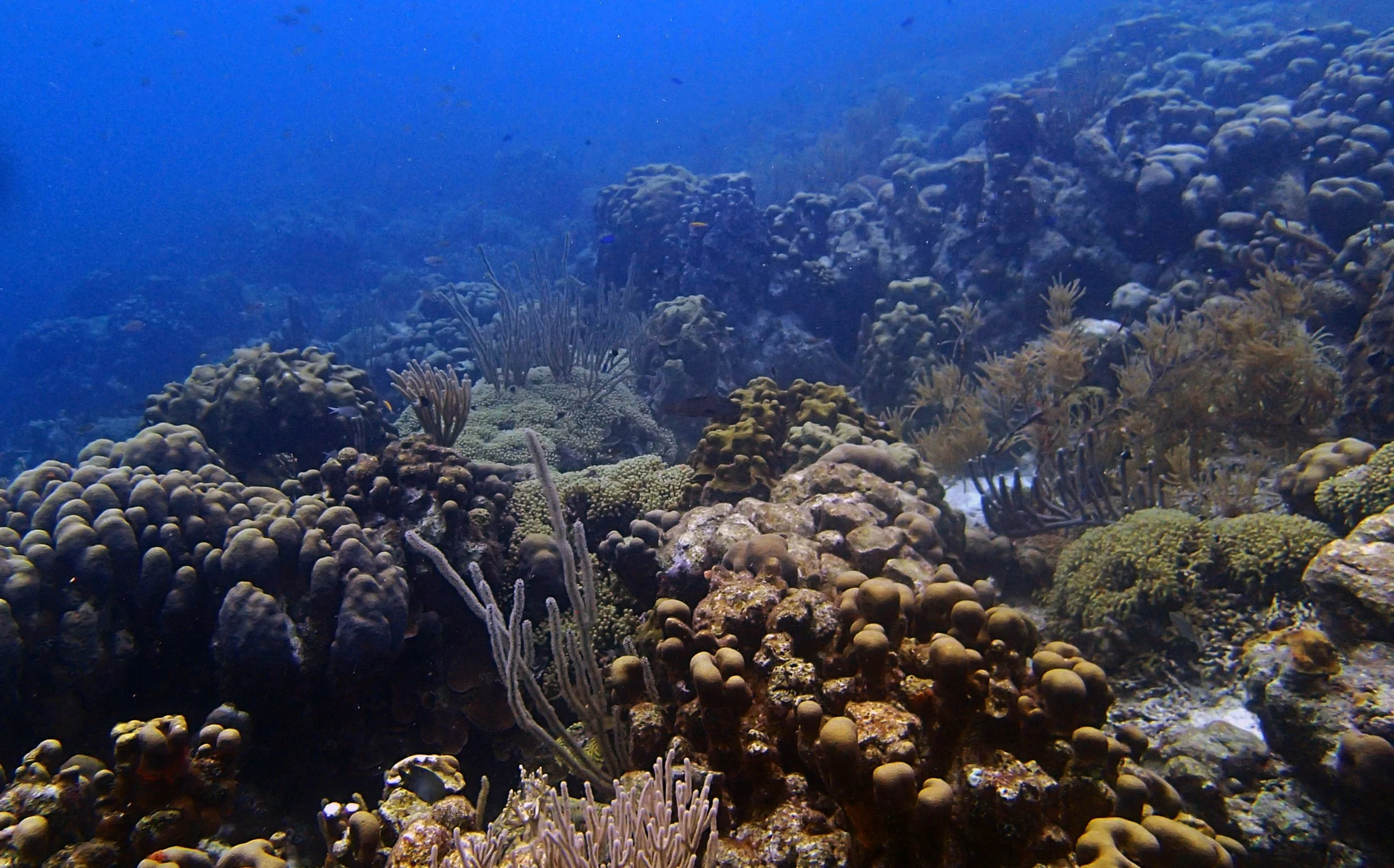
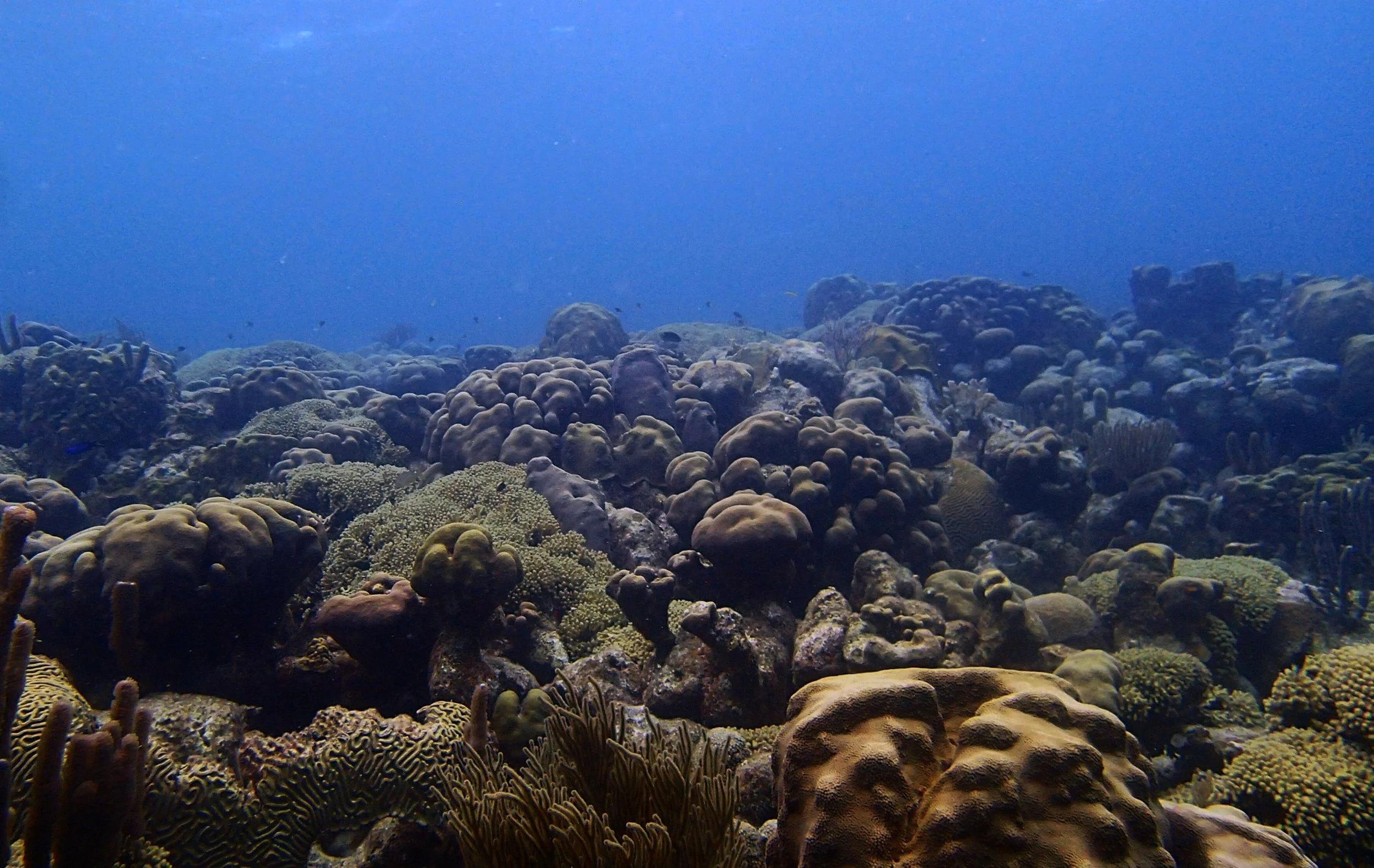
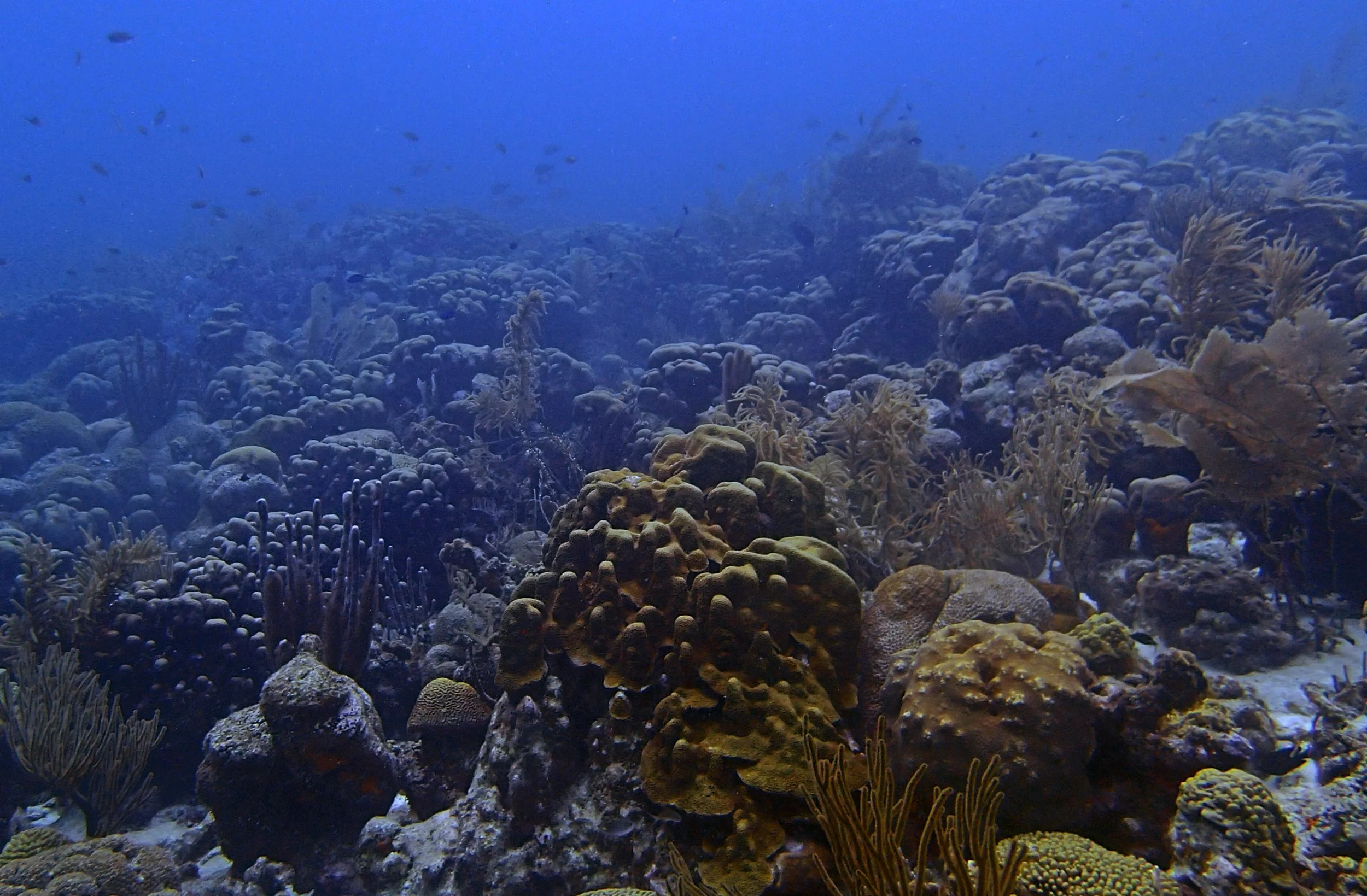
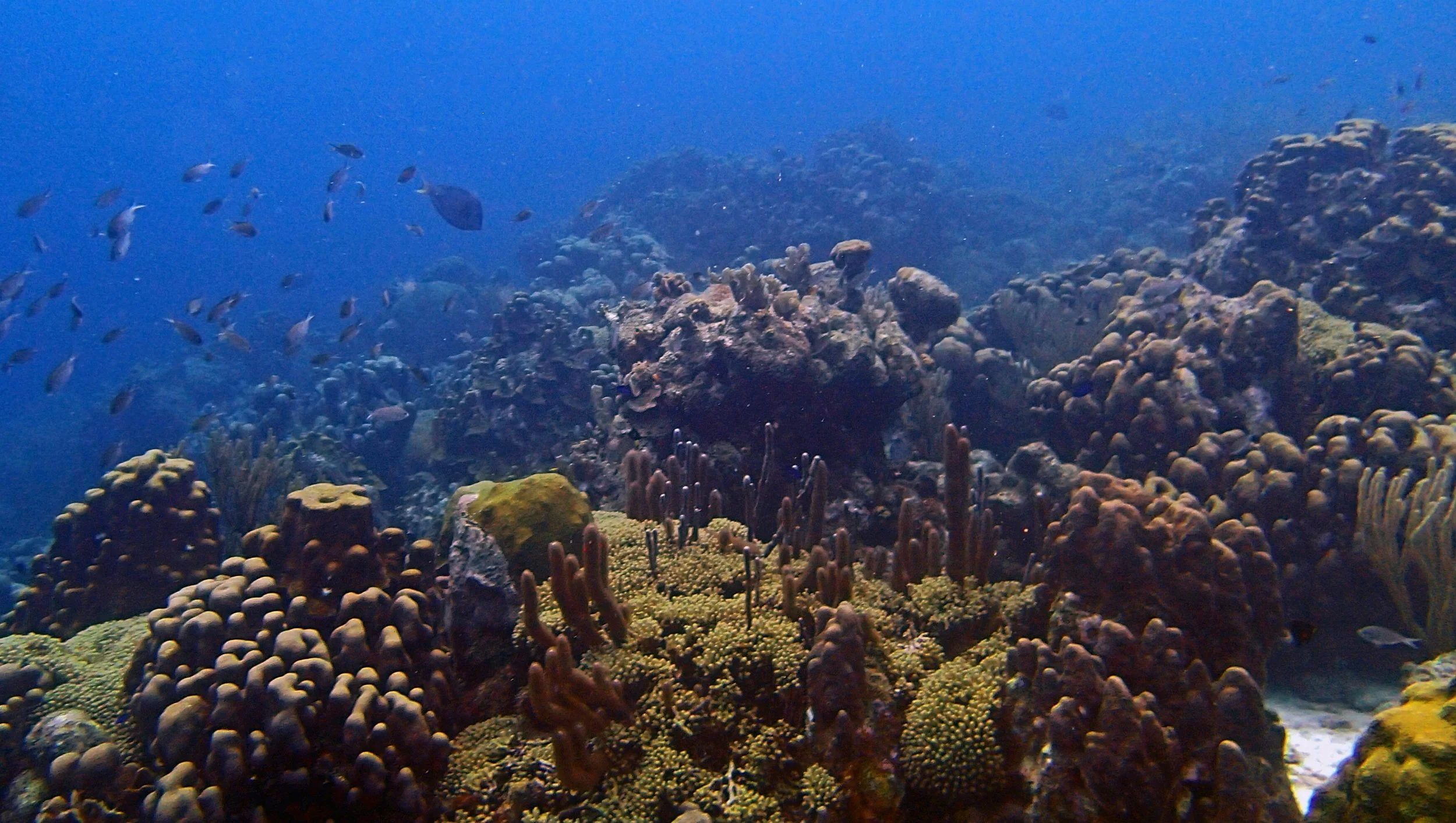
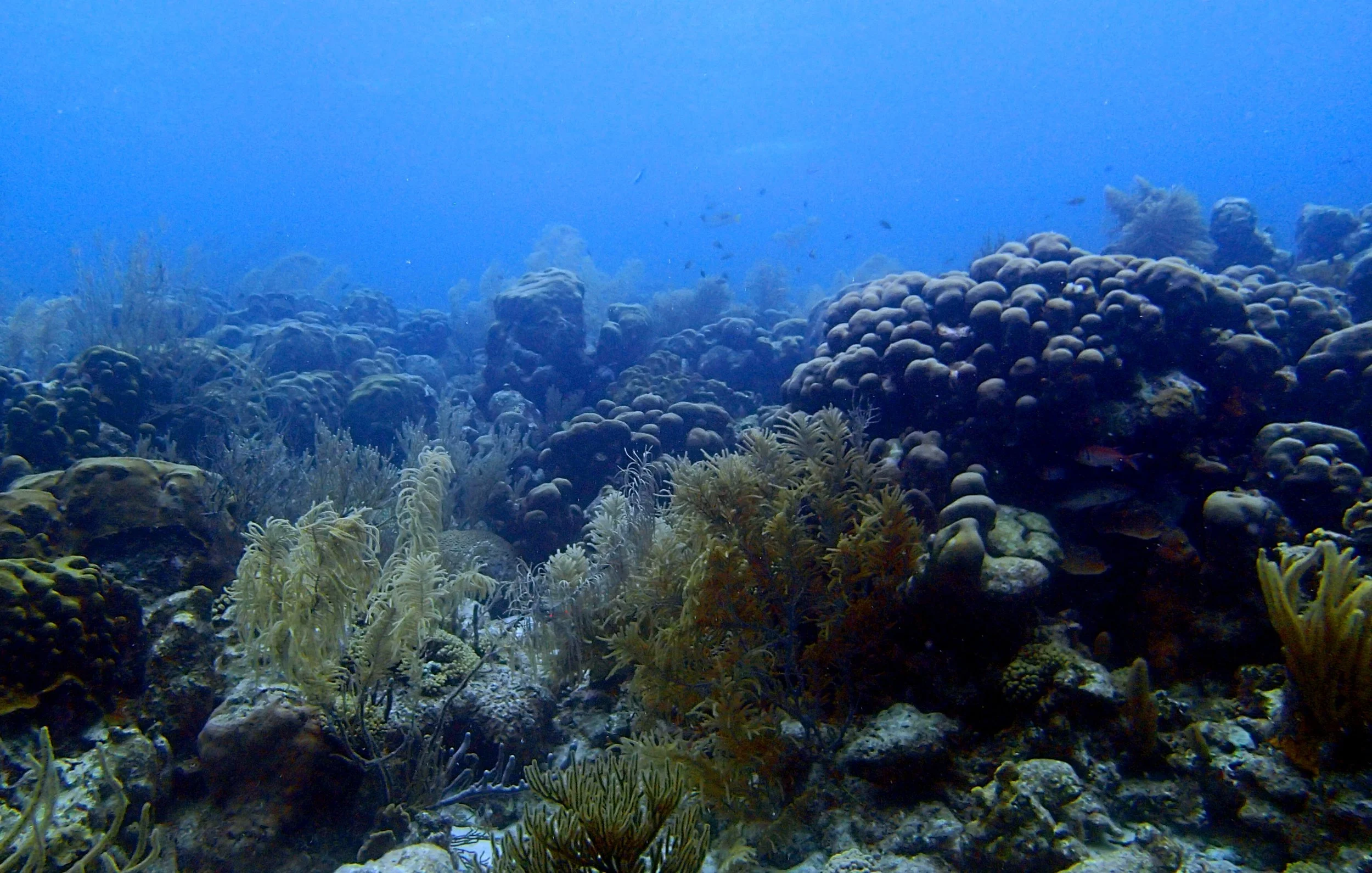
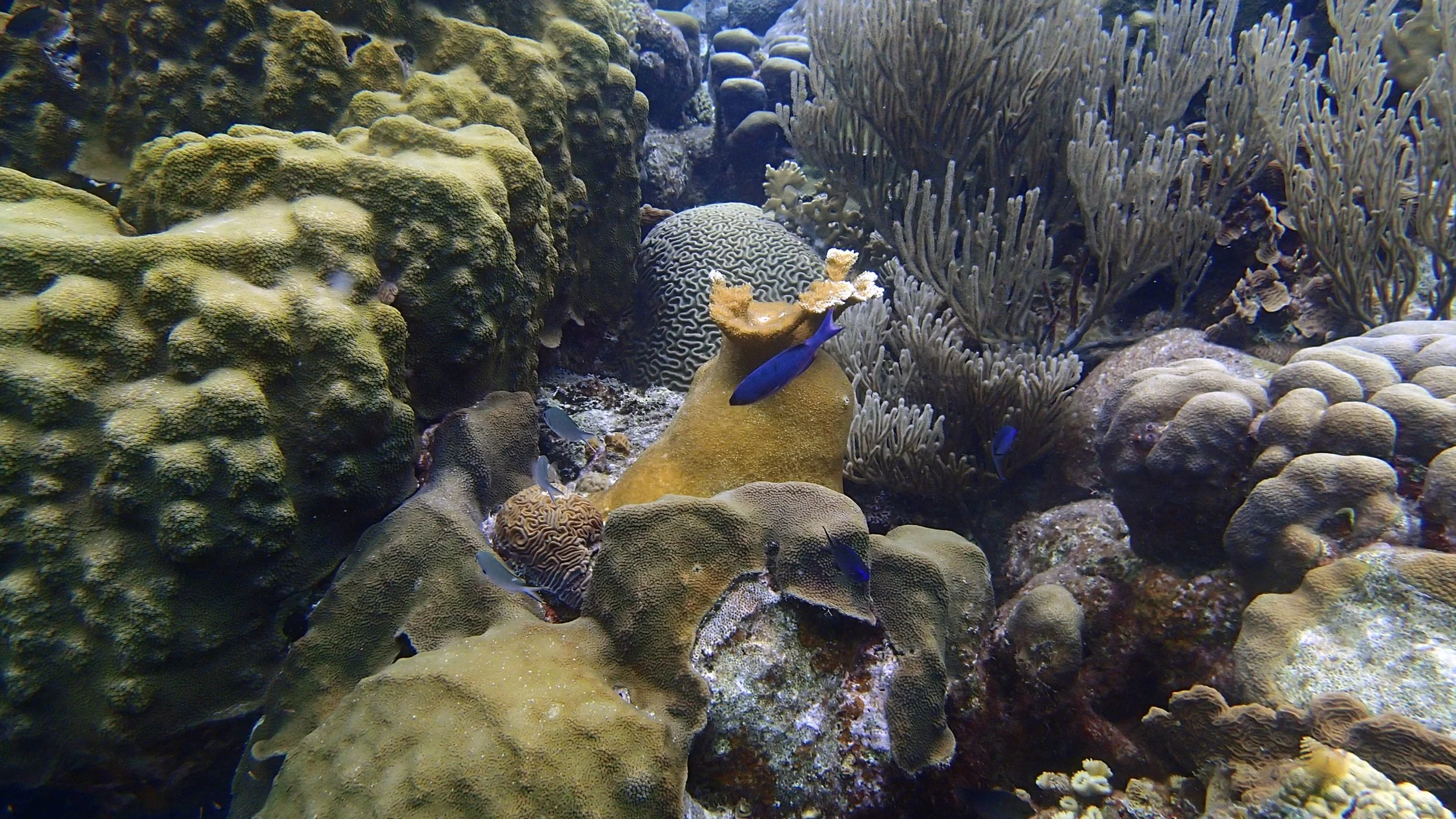
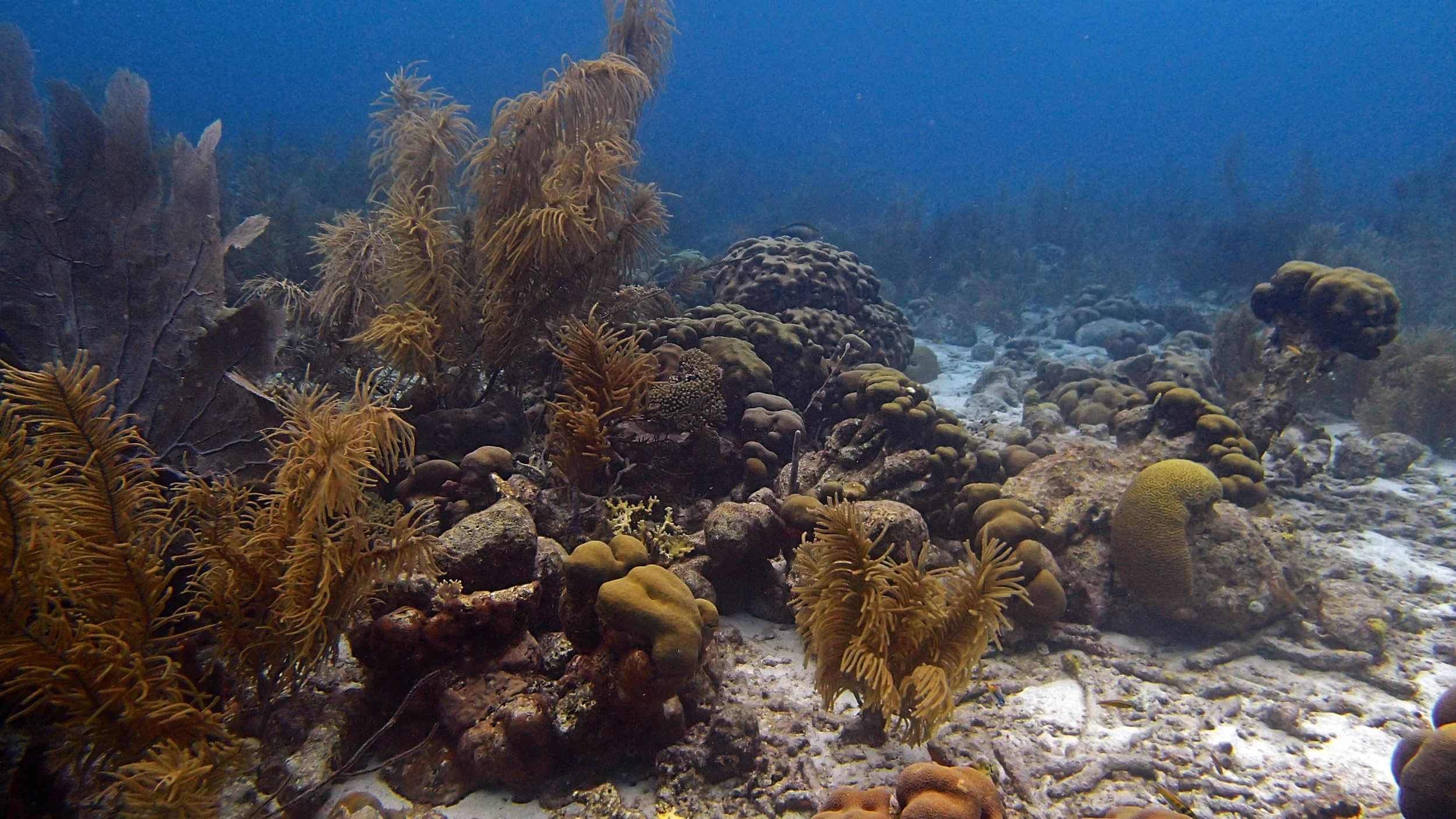
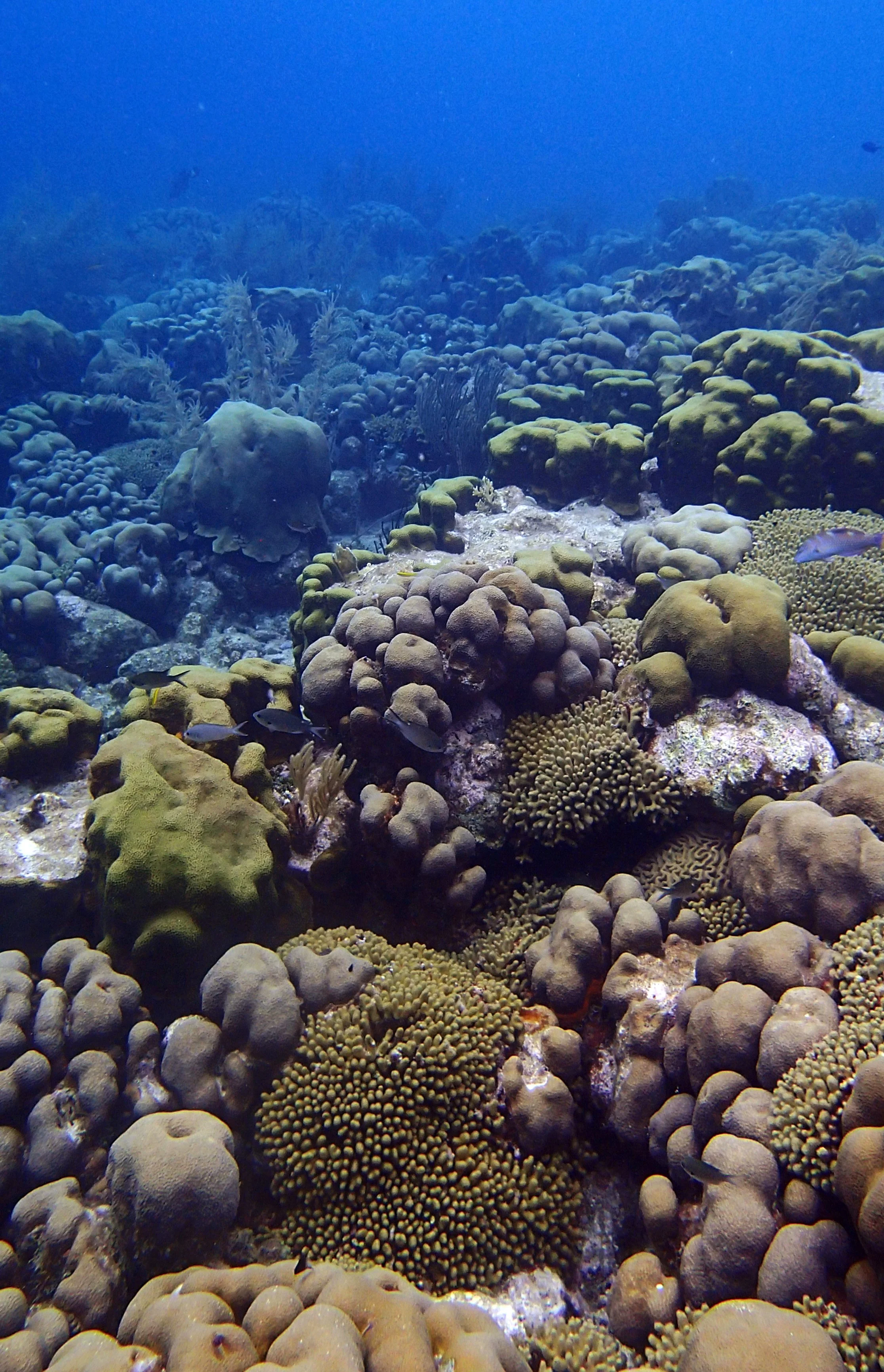
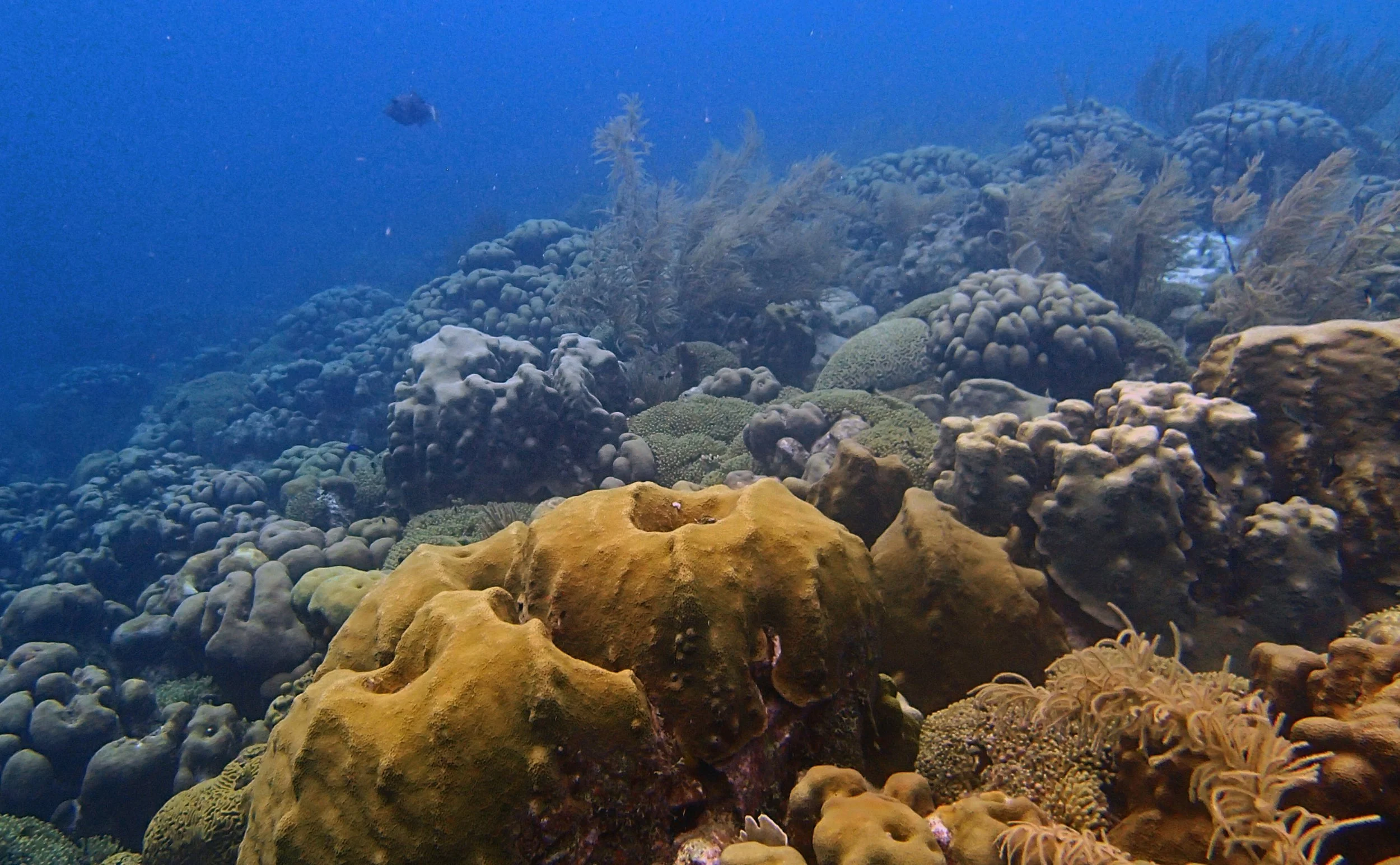
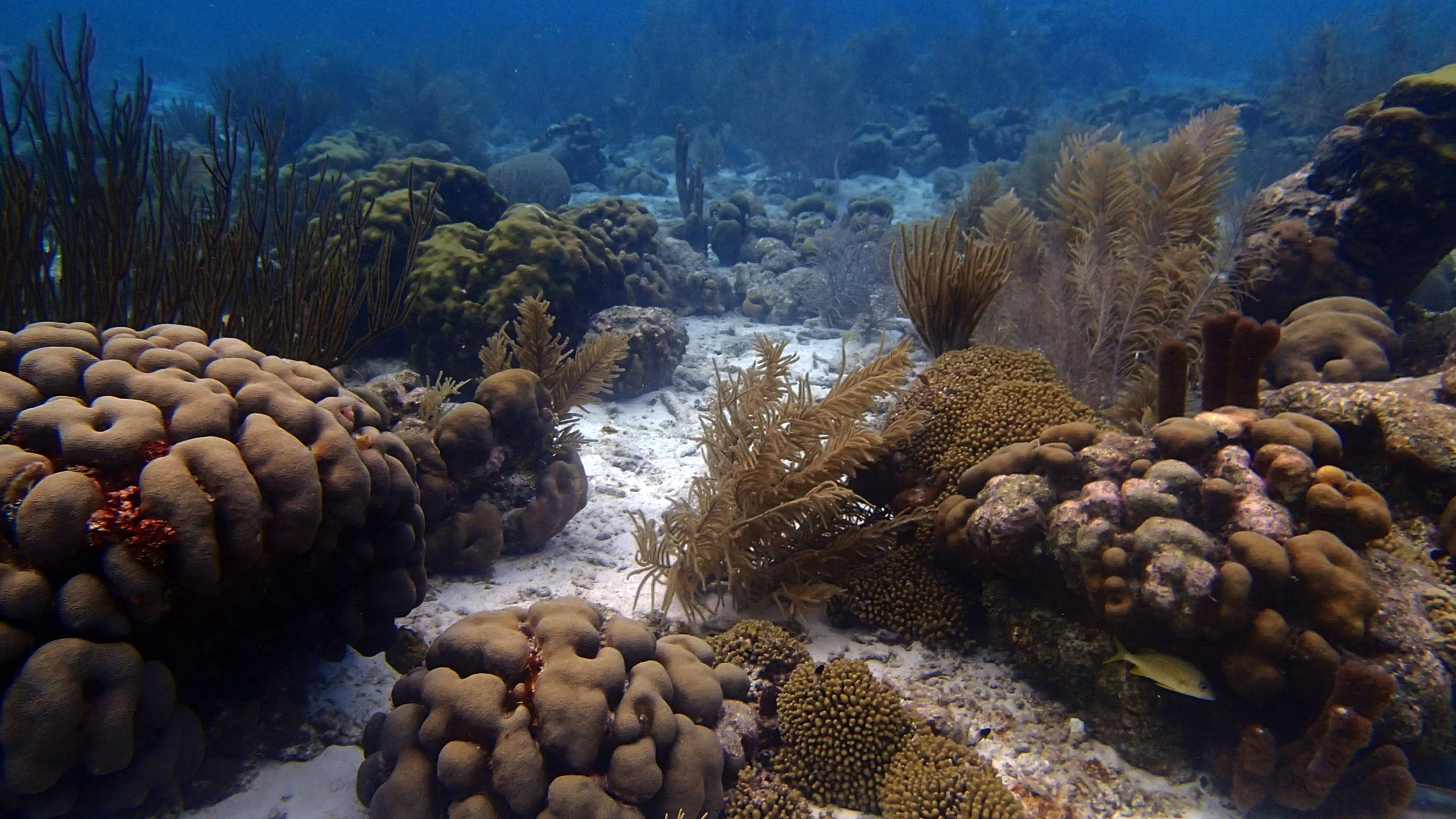
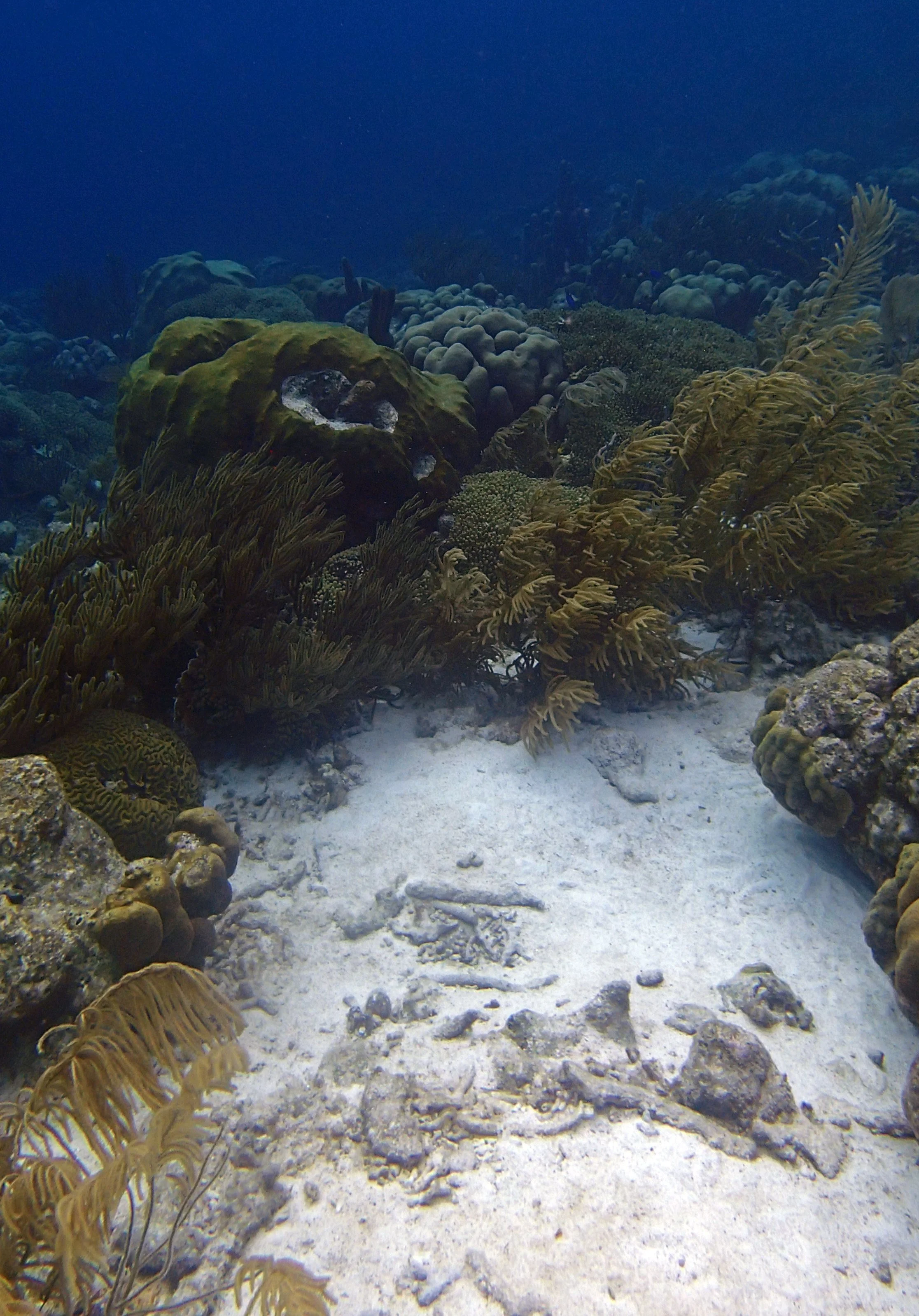
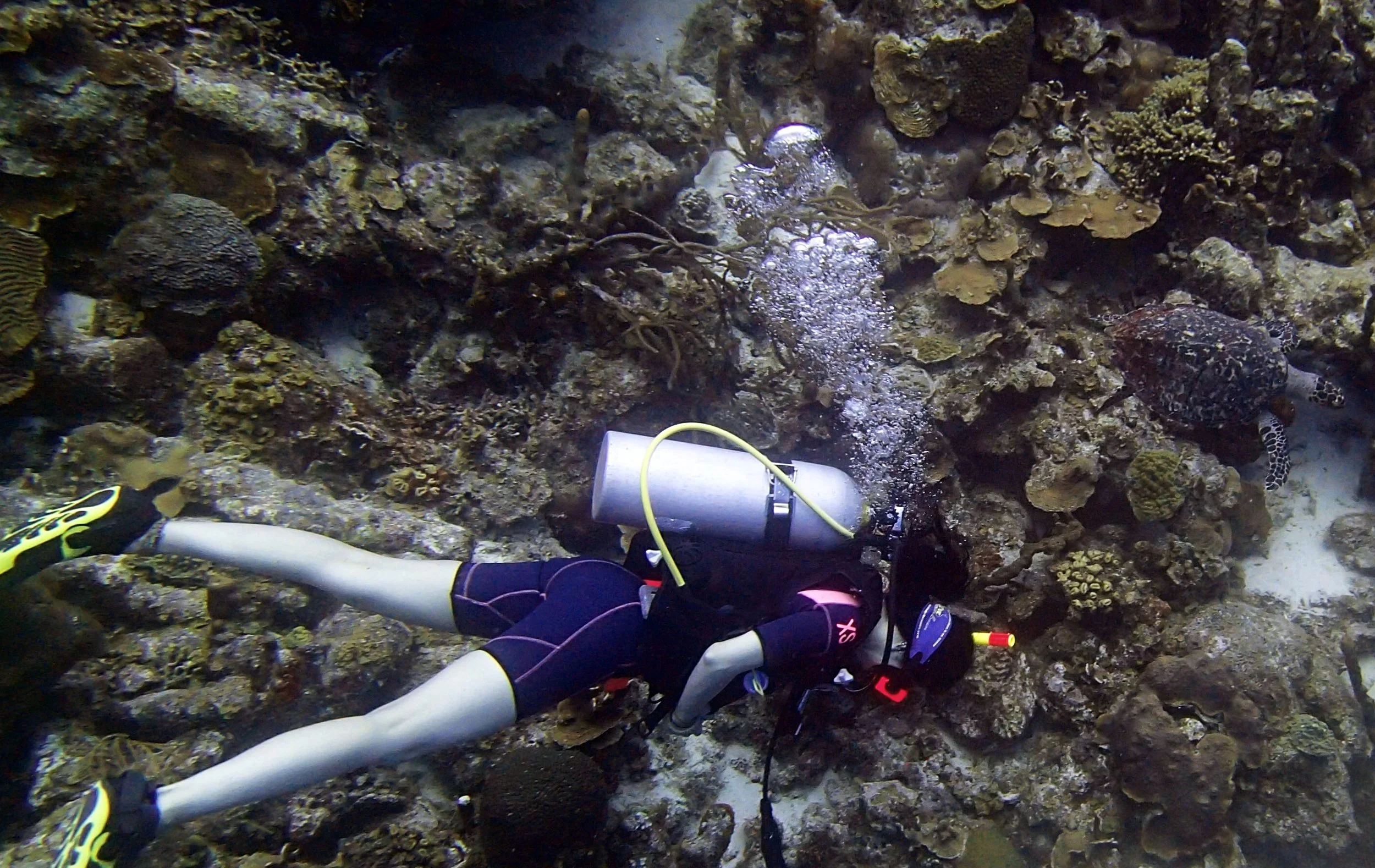
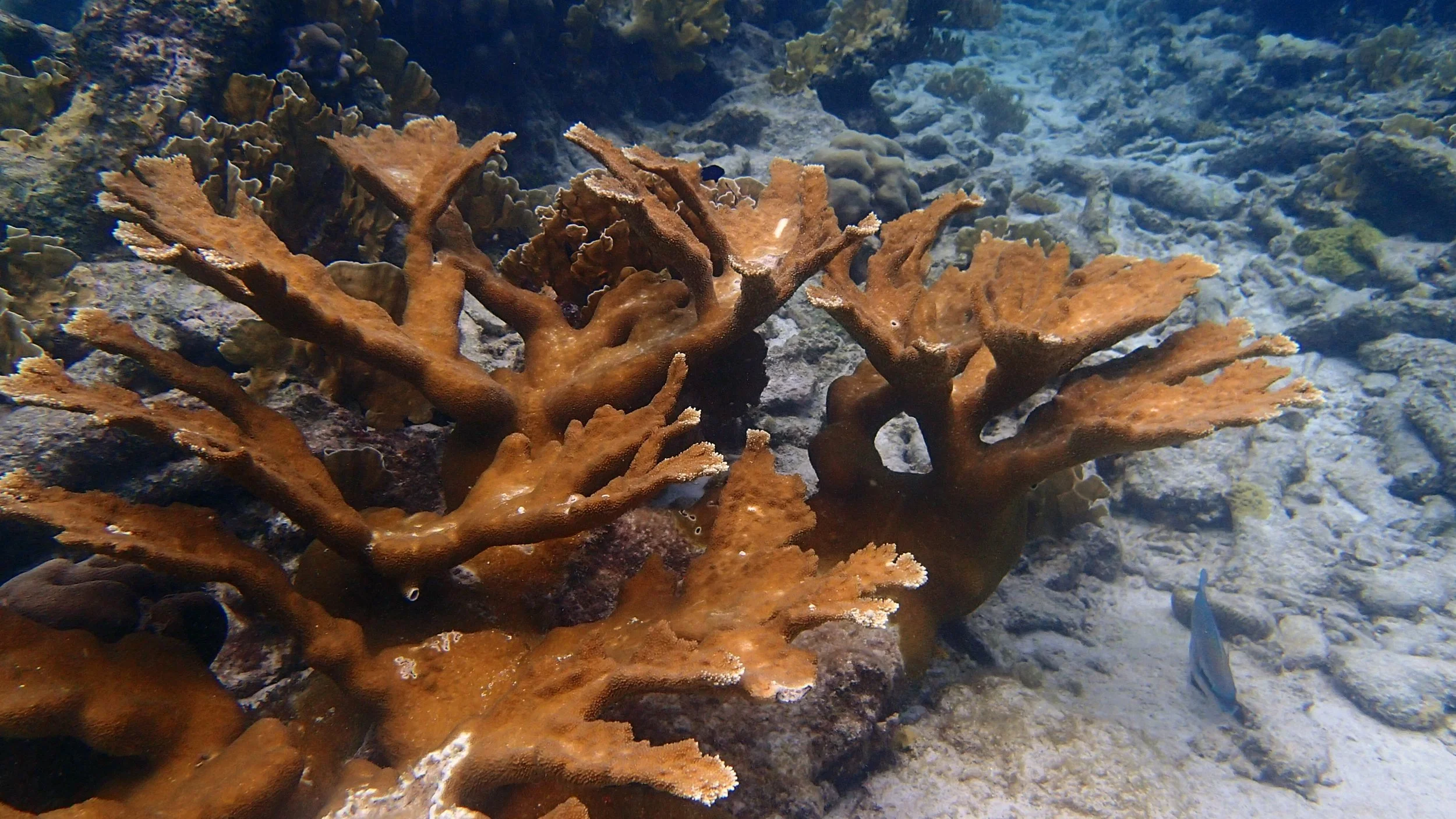
A shore dive down a concrete stairway on Bonaire’s northwest coast, entering a slope built on an extensive, unbroken carpet of boulder star coral heads with patches of elkhorn coral in the shallows and gorgonian sea plumes scattered among the mounds. Hawksbill turtles and dense schools of sergeant majors and blue chromis were observed. Coral cover in the shallows featured fields of large massive and lobate star-coral forms. On the wall, brain and plating corals, octocorals, and living Acropora palmata were observed. Turtles, schooling fishes, and blue tangs were conspicuous there.
No widespread bleaching signal was visible; most colonies retained substantial pigmented live tissue. However, some large brain corals presented extensive central old partial mortality and exposed skeletons. CoralSCOP estimated up to approximately 32% coral cover across 49 reviewed photographs (frame-to-frame SD=18%). Because DINOv3 was not run and CoralSCOP reads high at these cover levels, 32% is a provisional upper bound rather than settled site cover, and the photographs are decidedly opportunistic. Reef Check coral cover data averaged 28% at Karpata Reserve, 0.81 km away (2000–2003, n=8 surveys). In addition to temporal differences (14 years), methods differ: we used a citizen science+AI approach, while Reef Check conducted more typical, robust point-intercept transects. Coral cover has surely decreased on account of SCTLD, and I can’t imagine it is much higher than 10-15% now.
Typical recent thermal stress: mean annual maximum of 18°C- “degree-heating weeks” (DHWs; 2021–2025, NOAA CRW; Southern Caribbean ecoregion).